
Choose an industrial label for a thin, conformable identification surface when the adhesive, print, and protection can survive the equipment environment. Choose a metal nameplate where rigid mounting, abrasion, heat, or long-term retention controls the design. For fixed equipment identity, use a 10-year field-legibility goal as a demanding project screening target—not a guaranteed material life—and qualify the complete installed construction. Keep frequently revised service information separate.
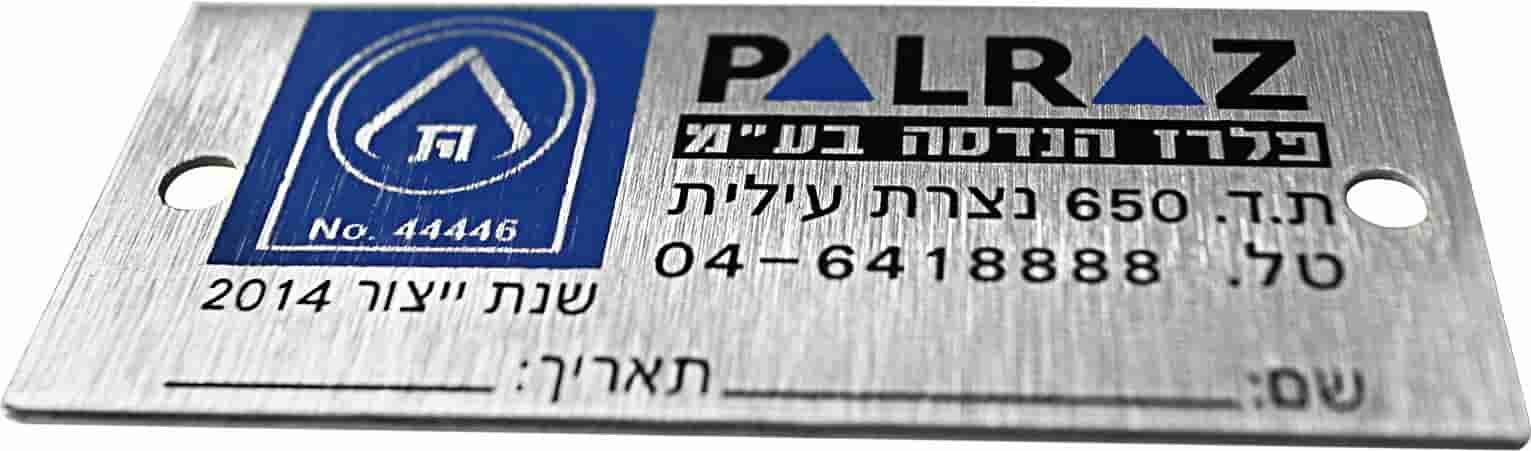
Industrial Label vs Metal Nameplate at a Glance
Compare finished installed parts under the same duty—not a film specimen against a bare-metal coupon.
| Same decision condition | Flexible industrial label | Rigid metal nameplate | Decision rule |
|---|---|---|---|
| Flat or gently curved housing | Thin film can follow a qualified contour | Plate generally needs a flat seat or engineered forming | Prefer film when flush fit is essential |
| Finished powder coat or molded plastic | Bond depends on coating, texture, surface energy, and assembly | Adhesive-backed plate shares bond risks; screws or rivets need suitable structure | Test the real finished surface |
| High rubbing or tool contact | Image protection and exposed edges are critical | Appropriate metal, finish, and marking may better tolerate contact | Compare legibility after realistic wear |
| Heat, cleaning, UV, and moisture | Performance depends on the exact film/ink/adhesive stack | Alloy and legend may withstand harsher conditions, but corrosion and attachment still matter | Qualify the whole installed assembly |
| Ten-year fixed-information goal | Possible only with construction-specific evidence and access for inspections | Useful starting point, especially with secure mounting; not automatically ten-year qualified | Do not treat nominal material life as proof |
| Field replacement after a model change | Can be fast, but removal may leave adhesive or damage paint | Screws enable planned removal; rivets or adhesives may add rework | Decide who replaces it and how |
| Unit-specific serial or 2D code | Flexible printing and variable-data workflows may be convenient | Marking route and code quality need a controlled variable-data process | Verify actual printed or marked samples |
| Total lifecycle effort | Low initial part and installation effort can be offset by repeated field labor | More preparation and hardware may be offset by fewer interventions | Model expected replacement events |
Neither choice eliminates legibility, installation, approval, or data-control obligations.
First Separate Ratings, Branding, and Asset Information
One combined identification part works only when its fields share a compatible approval authority, lifetime, and replacement trigger. Otherwise, combining them puts permanent product identity at the mercy of routine service updates. This is especially important when an OEM asks whether a rating plate, brand badge, and asset label can be one piece.
| Information function | Typical content | Change owner and trigger | Recommended separation decision |
|---|---|---|---|
| Rating / required equipment identification | Manufacturer, model, electrical or mechanical ratings, required warnings | OEM product engineering or compliance owner; controlled design change | Preserve as a governed, long-life record; combine only with equally stable fields |
| Brand badge | Logo, commercial product name, approved color or finish | Brand or product team; rebrand or cosmetic revision | May share a plate if graphic updates never jeopardize required data |
| Serial and manufacturing traceability | Unique serial, date or lot, human-readable ID, barcode or 2D code | Manufacturing data owner; each unit or production event | Can share a permanent plate if uniqueness, reprint, and scrap rules are controlled |
| Asset / service label | Customer asset number, inspection date, site ID, next service date | Fleet owner or service organization; reassignment or maintenance | Keep separate when field replacement is anticipated |
A stable machine can use one rating-plus-serial metal plate and a separate replaceable asset or service film label. A compact instrument may instead use one qualified film for brand, rating, and serial information if its content and approval remain fixed.
Map each field's wording, units, language, owner, revision rights, and serialization. A barcode does not replace required human-readable information unless the governing requirements allow it. Applicable product rules or contracts—not visual preference—control mandatory marking content and placement.
Compare the Four Practical Installation Configurations
This workflow compares four installations: (1) adhesive-backed flexible film, (2) adhesive-backed metal, (3) screw-mounted metal, and (4) riveted metal. It is not an exhaustive industry catalog; welded or specialty fixing needs separate design review.
| Configuration | Best reason to consider it | Installation and service burden | Reject or redesign when |
|---|---|---|---|
| 1. Film with pressure-sensitive adhesive | Low profile, curved housing, no new holes | Clean and prepare the approved surface; removal may damage finish | Edge peel stress, severe texture, residue, or heat exceeds the qualified construction |
| 2. Metal plate with pressure-sensitive adhesive | Rigid appearance without drilling | Plate flatness, bond area, and coating must be controlled; removal can be difficult | Weight, flex, or edge leverage undermines the bond |
| 3. Metal plate with screws | Positive fixing and intentional replacement access | Requires bosses/holes, torque rules, clearance, and galvanic-corrosion review | Thin housing, backside access, or sealing constraints make fastening unsafe |
| 4. Metal plate with rivets | Tamper-resistant fastening without later screw loosening | Requires access and a controlled setting operation; removal is destructive | Field updates or sensitive sealing surfaces require nondestructive removal |
Industrial label route. Qualify film, print, protection, adhesive, and liner together. Polyester or polycarbonate alone does not establish usable temperature, cleaner resistance, or adhesion to powder coat. Test the complete label on finished enclosure samples under the actual preparation process. For bond-interface background, see the graphic overlay adhesive selection guide.
Metal route. Aluminum and stainless steel are starting families, not complete specifications. Control grade, finish, marking, edges, mounting, and mating housing. Adhesive metal still depends on surface preparation; screws and rivets introduce holes, sealing, and corrosion risks. Avoid destructive rivets where planned replacement matters. Review the installed features through the metal nameplate product route.
Locate required identification where installed accessories and service covers do not hide it; never cover ratings with a brand or asset label.
Set the Legibility and Retention Requirement Before Choosing Material
A useful demanding reference for a fixed equipment ID is 10 years of readable required information in the declared installed environment. That is an OEM design goal used here to screen alternatives, not a standard universal minimum, proof of accelerated-aging equivalence, or a claim about any JASPER material. For a field-maintained asset label, a much shorter planned change interval may be appropriate; the governing value comes from the asset-management process.
Define minimum, maximum, sustained, and peak temperatures in °C; lighting and UV; water and washdown; cleaner name, concentration and dwell; abrasion; and maintenance access. A heat-tolerant film may still fail when adhesive or ink does not tolerate the same duty.
| Risk to required information | Test article or observation | Acceptance basis to put on the drawing |
|---|---|---|
| Adhesive lift or plate loosening | Applied samples on production-finish enclosures, after agreed conditioning | No detachment or unacceptable edge lift; project-defined bond/fastener acceptance |
| Image abrasion and cleaning | Printed or marked samples exposed to actual wipes, agents, and cycles | Every mandated field remains legible; coded fields scan under specified settings |
| Heat, moisture, and outdoor exposure | Candidate assembly exposed within the defined duty profile | Readability, finish, attachment, and corrosion limits agreed before testing |
| Discolored or stained surface | Controlled visual check in installed lighting and viewing distance | Contrast, character size, and field recognition remain acceptable |
| Unit identity after replacement | Trace a reissued plate or label to its authorized equipment record | No duplicate serial assignment, unauthorized edits, or lost old-to-new link |
Test final printing or marking, part geometry, edges, and finished enclosure. A bare coupon does not prove installed corrosion resistance or adhesion. UL 969 may be relevant where the applicable program requires a recognized marking system; generic “UL label” wording does not validate a particular print, substrate, attachment, or end product.
Approve first articles for contrast, reading distance, code quality, access, and retention. Schedule field inspections; accelerated exposure cannot be equated to ten calendar years without a validated correlation.
When a Flexible Industrial Label Wins—and When It Fails
Flexible film wins for thin geometry, conformity, variable information, or accessible replacement. It can fit a gentle curve or recess without drilling or added fastener height. Approve dense text and codes at production size.
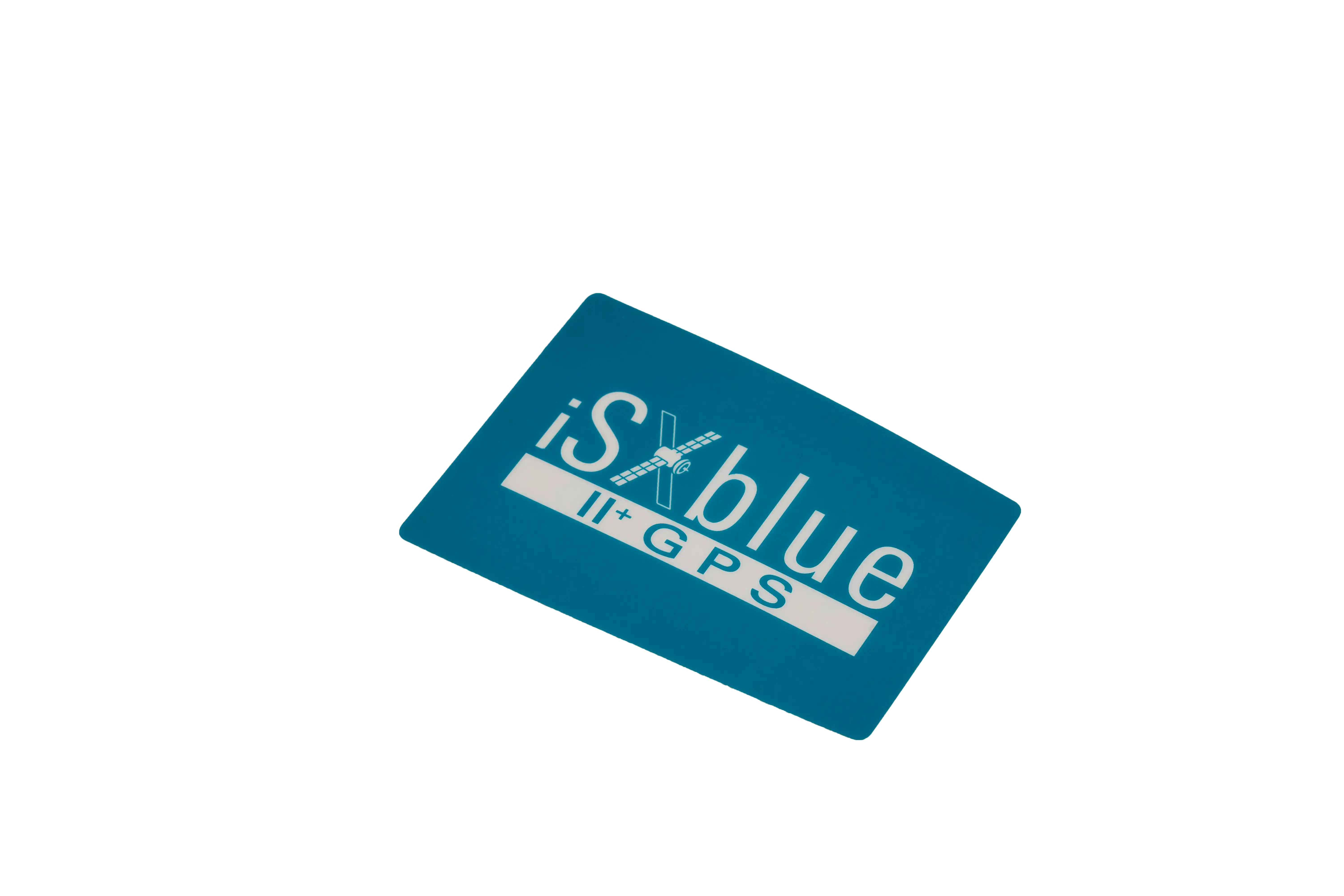
Main risks are bond separation, image abrasion, surface incompatibility, and damaging removal. Well-specified film may outperform an unsuitable metal assembly; the construction and duty decide. For planned replacement, verify retention during service and clean removal afterward.
Choose film for a stable indoor cabinet or controlled outdoor application when qualification supports the required identity life. Do not choose film solely because it is inexpensive when a remote field repair requires shutdown, travel, enclosure refinishing, or recertification of an identification record.
When a Metal Nameplate Wins—and When It Fails
Metal wins where rigid installation, mechanical fastening, or severe contact controls. A suitable alloy, finish, marking, and hardware can protect fixed ratings through handling and cleaning. Variable data still needs controlled records.
Metal does not eliminate failure. A plate may snag, create a sharp edge, corrode at a fastener, distort a thin panel, obscure a service cover, or become unreadable as a surface print wears. Stainless steel on a dissimilar housing is not automatically corrosion-safe, and a decorative finish is not an acceptance test. Etched, anodized, and printed marks should be selected for the actual degradation mechanism; the metal marking methods comparison covers that separate process decision.
Avoid a fixed metal plate for information that changes with every inspection unless the plate is designed for quick replacement. Never drill or weld a safety-critical, sealed, or thin-walled housing merely to make a rigid plate fit. Sometimes the right answer is to relocate permanent identification to a protected flat boss and use a separate replaceable label for operational data.
Equipment Selection Matrix: Choose a Route by Failure and Repair Mode
Use the following matrix after the OEM has fixed required fields, the installation surface, and the expected service interval. The choices are screening recommendations; production drawings and representative evidence still control approval.
| Equipment case and controlling input | First route to evaluate | Not the preferred route when | Design or verification priority |
|---|---|---|---|
| Indoor electronic enclosure; gently curved, smooth, protected area | Adhesive flexible label | The actual finish cannot retain adhesive | Check fit, dwell, print and code quality |
| Fixed outdoor machine ID; 10-year goal; frequent abrasion and accessible holes | Mechanically fixed metal nameplate | Hole drilling or galvanic risk is unacceptable | Qualify alloy, fasteners, readable mark and installed inspection |
| Flat enclosure; no holes permitted; rigid appearance required | Adhesive-backed metal plate | Thermal movement, mass or edge leverage lifts the bond | Test finished-assembly adhesion and plate flatness |
| Field-maintained asset inventory number; regular reassignment | Replaceable flexible service label, separate from fixed rating ID | Removal damages paint or loses asset-history linkage | Approve residue, data ownership and replacement procedure |
| Wet or chemical-cleaned equipment; sealed thin wall | Neither route selected without installed qualification | Both the adhesive and penetrative fastening violate the envelope | Redesign mounting seat or protective location first |
| Permanent rating data plus often-updated calibration/service date | Long-life rating plate or qualified fixed label plus separate service label | One combined graphic forces removal of required fixed data | Independent revision and repair controls |
Worked equipment example. Assume an OEM has a powder-coated enclosure that will remain in service for ten years. The model, serial number, and electrical rating are fixed, while a customer-specific asset ID can change every two years. If the protected mounting area is smooth and film qualification meets the ten-year marking requirement, a fixed film rating label is viable. If repeated tool contact and external exposure control the risk and the enclosure supports holes, use a fastened metal rating plate. In both cases, place the changing asset ID on a separate, removable film label. The two-year interval is an example business assumption, not an asserted product lifetime.
A Field-Level Selection and Approval Record
An RFQ decision needs a record that another manufacturing or service team can execute, not simply a material preference. The example below shows how to separate assumptions from release evidence.
| Field | Illustrative project entry | Release owner / evidence needed |
|---|---|---|
| Equipment and design target | Powder-coated control cabinet; 10-year fixed-ID legibility | Product engineering approves duty and accessibility |
| Permanent fields | Model, serial, rated voltage, rated current, manufacturer identity | Engineering controls wording, units, location and revision |
| Service field | Customer asset ID; may change every 2 years | Service organization owns reassignment and old-to-new history |
| Candidate installation | Screw-fixed metal plate on supported boss; separate service film | Mechanical drawing defines holes, hardware, location and removal |
| Environment | Declared °C range, cleaner and concentration, wet exposure, tool contact | Application team supplies actual duty profile |
| Data and verification | Serial rule, code format if used, first-article photo, scan and installed inspection | Quality authorizes the measured acceptance record |
| Revision and repair | Plate revision independent of service label version | Change-control owner records replacement and preservation of identity |
This is a record template, not a tested customer case. Populate it from the real equipment specification; any blank exposure or acceptance field prevents final material approval.
Repair Workflow: Do Not Lose the Equipment's Identity
Service access matters: inaccessible screws and adhesive removal that damages mandatory markings can overturn the material choice.
- Identify the reason for replacement. Is the manufacturer rating incorrect, is the asset assigned to a new owner, or is the old graphic physically illegible? Apply the correct authorization path for each.
- Protect permanent identity. Retain the serial-to-machine association and any mandatory content; do not cover or discard it merely to update a service number.
- Verify the approved replacement record. Check artwork revision, configuration, serial allocation, language, and data source before issuing a label or plate.
- Follow the approved removal method. Specify fastener access and torque for screw plates, destructive removal for riveted plates, or temperature, tool, and residue limits for adhesive parts. Do not improvise on energized or safety-sensitive equipment.
- Install and inspect the replacement. Use the production-approved cleaning, application, alignment, and inspection conditions; record the new part revision and scan result if applicable.
- Close the traceability loop. Link old and new part IDs, the equipment serial, the authorized reason for change, and the service record, including disposition of obsolete stock.
Where the repair burden is high, separate fixed rated identity from changeable service labeling at the original design stage. Replacing a customer asset label should not require removing the OEM's original rating information.
Compare Lifetime Cost Using Replacement Events, Not Unit Price Alone
Material price is only one cost. The installed cost also includes hole preparation or surface cleaning, line-side labor, inspection, field replacement, travel, access, and any enclosure refinishing. A simple ten-year model makes the crossover visible:
Cost per equipment unit = initial part cost + initial installation labor + N × (replacement part cost + replacement field labor), where N is the number of expected replacements during the chosen service horizon. Add travel, downtime, disposal, or repair charges separately when they exist.
For an illustrative calculation only, assume a flexible label costs $2.50 each, takes $1.00 of initial installation labor, and a field replacement takes 12 minutes at $60/hour = $12.00 plus a new $2.50 label. Assume a metal plate costs $8.00 and initial fastening labor is $3.00, with no planned metal replacement in the ten-year scenario. These are hypothetical inputs, not JASPER quotations, industry averages, or evidence of material life.
| Ten-year scenario, per equipment unit | Film cost calculation | Film total | Metal total with no replacement |
|---|---|---|---|
| No field replacement | $2.50 + $1.00 | $3.50 | $11.00 |
| One film replacement | $3.50 + 1 × ($2.50 + $12.00) | $18.00 | $11.00 |
| Three film replacements | $3.50 + 3 × ($2.50 + $12.00) | $47.00 | $11.00 |
| Three replacements; labor doubles to $120/hour | $3.50 + 3 × ($2.50 + $24.00) | $83.00 | $11.00 |
For 100 machines and three label replacements, this example totals $4,700 for film versus $1,100 for metal. No-replacement film reverses the result. Compare equal exposure and all field costs; neither scenario proves durability.
What to Release for an OEM Label or Nameplate RFQ
A decision can be manufactured only after the OEM releases the identity data and its installation interface. Use the label and nameplate product overview to align the proposed film or rigid route with the equipment identification task, then transmit an actual drawing package covering:
- Artwork and information rules: vector master, exact fixed fields and units, brand file, language versions, data owner, serial or barcode format, uniqueness, reprint rules, and revision control.
- Part geometry and substrate: overall dimensions, hole and edge locations, shape, candidate film or metal grade, thickness, color and finish, and protective or marking method.
- Installed interface: housing material and coating, texture, curvature, bosses, fastener access, adhesive keep-outs, cleaning and application conditions.
- Duty and acceptance: intended years in service, temperature in °C, cleaning agent/concentration, UV and water exposure, abrasion, read distance, scanner settings, first-article checks, and failure/replacement rules.
- Production handoff: packaging, serialization data file, part revision, sample and annual quantities, service replacement packaging, and record retention owner.
The final route may be a single qualified flexible rating label, a secured metal plate, or a stable rating plate plus a removable asset label. Pick the smallest controlled system that keeps mandatory information readable and traceable through manufacturing and repair. Start a JASPER review through Send Drawing, then provide the artwork, field and serial rules, material and dimensions, mounting surface, service environment, packaging, revision, and quantity through the drawing handoff.
Frequently Asked Questions
When is an industrial label better than a metal nameplate?
Choose a flexible industrial label when the equipment needs a thin profile, a gently curved mounting area, detailed variable printing, or planned service replacement. The label still needs a specified film, print, protection, adhesive, and application method. Test the complete construction on the actual finished enclosure rather than assuming that any polymer label will stay bonded.
Does a metal nameplate always outlast a flexible label?
No. Service life depends on the installed system, not the substrate name. A poorly chosen alloy or fastener may corrode, and an unqualified surface print may become unreadable. A properly protected film can perform well in a suitable environment. For a ten-year fixed-information design target, compare representative samples and define the readable end-of-life condition.
Can a rating plate, brand badge, and asset label be combined?
Yes, if the fields have compatible approval owners, lifetimes, and replacement triggers. The combined part must keep all required content readable, and revisions cannot silently change a rating or serial assignment. When customers often reassign asset numbers or service dates, put that information on a separate replaceable label so the fixed OEM identity stays intact.
Can an adhesive-backed metal nameplate replace screws or rivets?
It can when the plate, adhesive, coating, geometry, temperature, and handling environment have been qualified together. Metal rigidity and weight can add peel leverage even when the adhesive bonds well to a flat coupon. If abrasion, tamper resistance, or long-term retention calls for positive fixing, evaluate screws or rivets with the housing structure and sealing requirements.
What works best on a curved or powder-coated enclosure?
A flexible label is usually the first fit candidate for a gentle curve, but powder-coat chemistry, roughness, curvature, and cleaning can undermine its bond. An adhesive-backed metal plate does not escape those problems and may also bridge the curve. Test production-finish samples; if neither bonds securely, create a protected flat mounting seat before finalizing the identification design.
How should an OEM replace an unreadable identification part?
First determine whether the part carries mandatory fixed identity or only service information. Use an authorized artwork revision and serial record, remove the failed part by its approved method, then inspect the new installed mark. Preserve the equipment-to-serial association and log the reason, replacement version, and disposition of obsolete parts. Service labels should not cover permanent ratings.
Does UL 969 mean an industrial label must be made of metal?
No. UL 969 addresses marking and labeling systems, including defined adhesive or mechanically attached constructions within its scope. What a particular end product must use depends on the relevant product standard, certification program, recognized construction, and application. Do not treat a generic material description or a supplier statement as proof that the installed equipment marking meets the applicable requirements.
What should I send for a label-versus-nameplate quotation?
Send the drawing and artwork, required fields and serial-number rules, part dimensions, proposed film or metal finish, production enclosure material and coating, operating and cleaning conditions, and packaging. Include sample and annual quantities, expected information lifetime, service replacement method, and first-article acceptance criteria. Those inputs let the reviewer compare finished installation routes rather than quote unmatched material samples.
Bring the drawing, stack and operating conditions
JASPER engineering will review the interfaces, open risks and evidence required for a production quote.