
Materials and prepress
Confirm film, adhesive, ink, circuit substrate, domes, LEDs, connectors, backers, liners, active files, print separations, tooling data, and revision before production.
Membrane switch manufacturing combines graphic printing, printed circuitry, precision converting, purchased components, lamination, and inspection. JASPER plans the route around the released drawing, approved sample, material set, order quantity, and the defects that must be contained before shipment.
JASPER does not treat a membrane switch as one printing operation. The route can include incoming material control, overlay and circuit printing, dielectric insulation, domes or components, cutting and embossing, adhesive conversion, staged lamination, connector preparation, assembly, electrical and visual inspection, protection, and packing. Exact tooling, equipment, sampling, and records depend on the released construction.
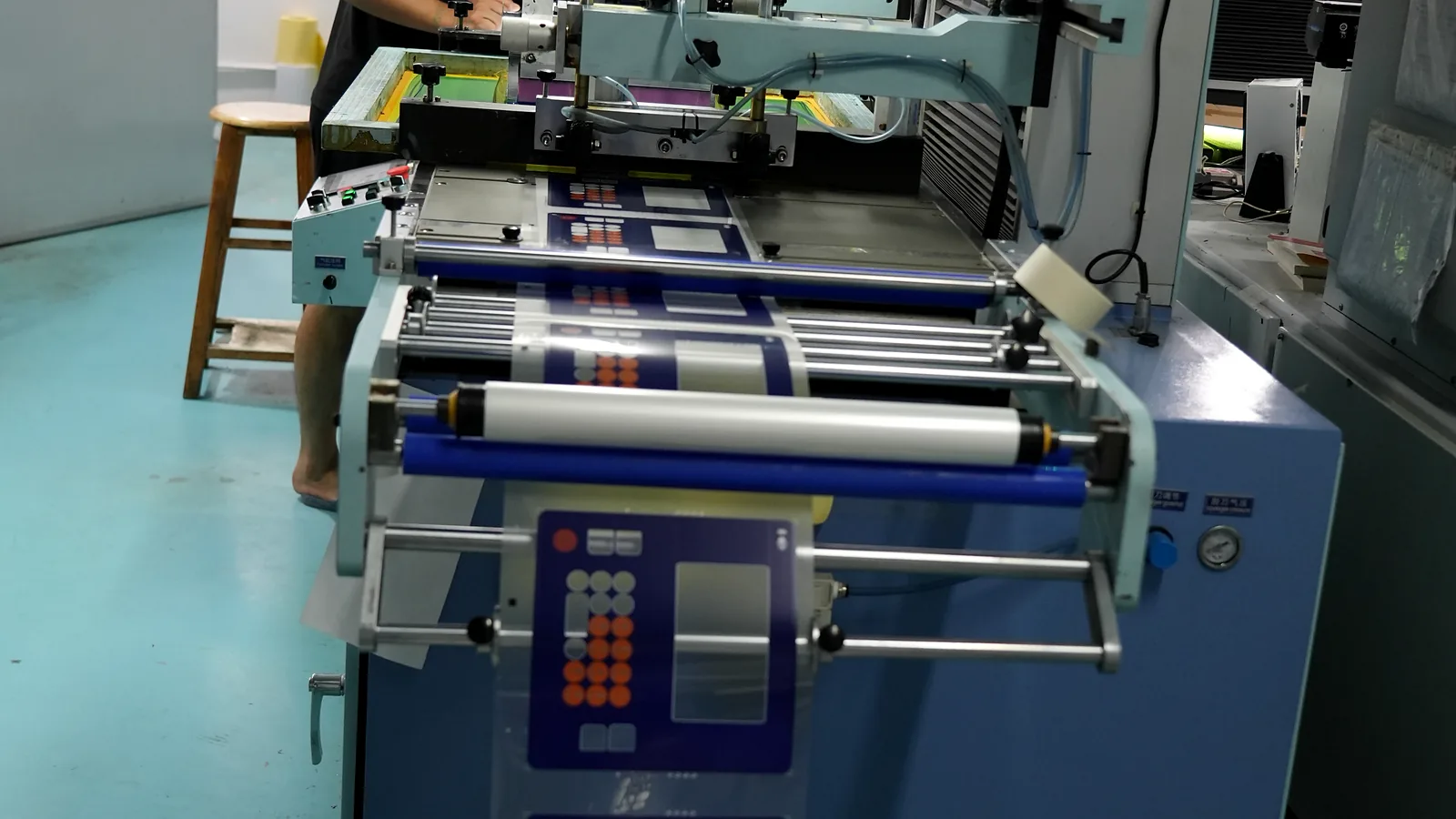
Individual projects can add purchased electronics, lighting, backers, gaskets, or HMI assembly. The core controls remain connected to the drawing and process stage.
Confirm film, adhesive, ink, circuit substrate, domes, LEDs, connectors, backers, liners, active files, print separations, tooling data, and revision before production.
Print graphics, masking, conductors, contacts, dielectric, and other specified layers with project controls for cure, registration, appearance, continuity, isolation, and handling.
Cut, emboss, vent, convert adhesive, place domes or components, align layers, laminate in sequence, prepare tails and stiffeners, and contain particles, bubbles, folds, and exposed adhesive.
Check agreed dimensions, artwork, surface, electrical state, key response, LEDs or windows, connector, labels, quantity, protection, packaging, and required lot records.
Final inspection is useful, but it cannot economically recover every defect created several operations earlier.
| Production stage | Control focus | Evidence to define |
|---|---|---|
| Printing | Color, legend, opacity, window, line condition, registration, cure, contamination | Approved appearance reference, print file revision, viewing condition, in-process criteria |
| Circuit | Open, short, trace damage, contact geometry, dielectric coverage, pinout, tail orientation | Circuit data, test state, fixture, connector reference, continuity or isolation criteria |
| Converting and lamination | Outline, holes, embossing, adhesive pattern, dome and LED position, bubbles, edge condition | Datums, critical dimensions, layer references, assembly sequence, defect limits |
| Final release | Appearance, function, identification, quantity, protection, packing, records | Released drawing, approved sample, inspection plan, lot and report expectations |
The quotation becomes more reliable when the intended materials, process risks, annual volume, and inspection evidence are visible.
A typical route can include graphic and circuit printing, dielectric printing, curing, cutting, embossing, adhesive conversion, dome or LED placement, layer alignment, lamination, tail and connector preparation, electrical testing, visual inspection, protection, and packing.
Screen printing is common for graphics and printed circuits, but the selected route depends on artwork, materials, quantities, conductor system, feature size, optical needs, tooling, and repeat-order requirements. Confirm the actual quoted process.
The released circuit defines pinout and states. Continuity, isolation, open or short detection, contacts, LEDs, connectors, or actuation can be checked with agreed fixtures and acceptance conditions at appropriate stages.
Report fields, sample frequency, measured characteristics, format, lot linkage, and approval responsibility should be stated in the RFQ. Availability depends on the agreed control plan and quoted scope.
Send the drawing, material stack, quantities, approval criteria, and required records so JASPER can review the manufacturing route before tooling and production.
Share the project basics. JASPER will review the stack, materials, connector, quantity, and production risks.