
Requirement review
Identify critical characteristics, drawing hierarchy, application exposure, mating parts, customer standards, and the evidence required with samples or shipments.
A useful test plan starts with the drawing, the assembled product, and the failure that must be prevented. JASPER helps OEM teams define inspection and validation inputs for membrane switches, graphic overlays, silicone keypads, touch panels, seat sensors, HMI assemblies, and printed electrodes.
JASPER does not apply one universal test package to every interface. The appropriate checks depend on the circuit, materials, operator, enclosure, cleaning exposure, lighting, connector, mounting method, and the customer's finished-device validation plan. The RFQ and sample approval record should identify the characteristic, condition, method, sample stage, and acceptance owner before production release.
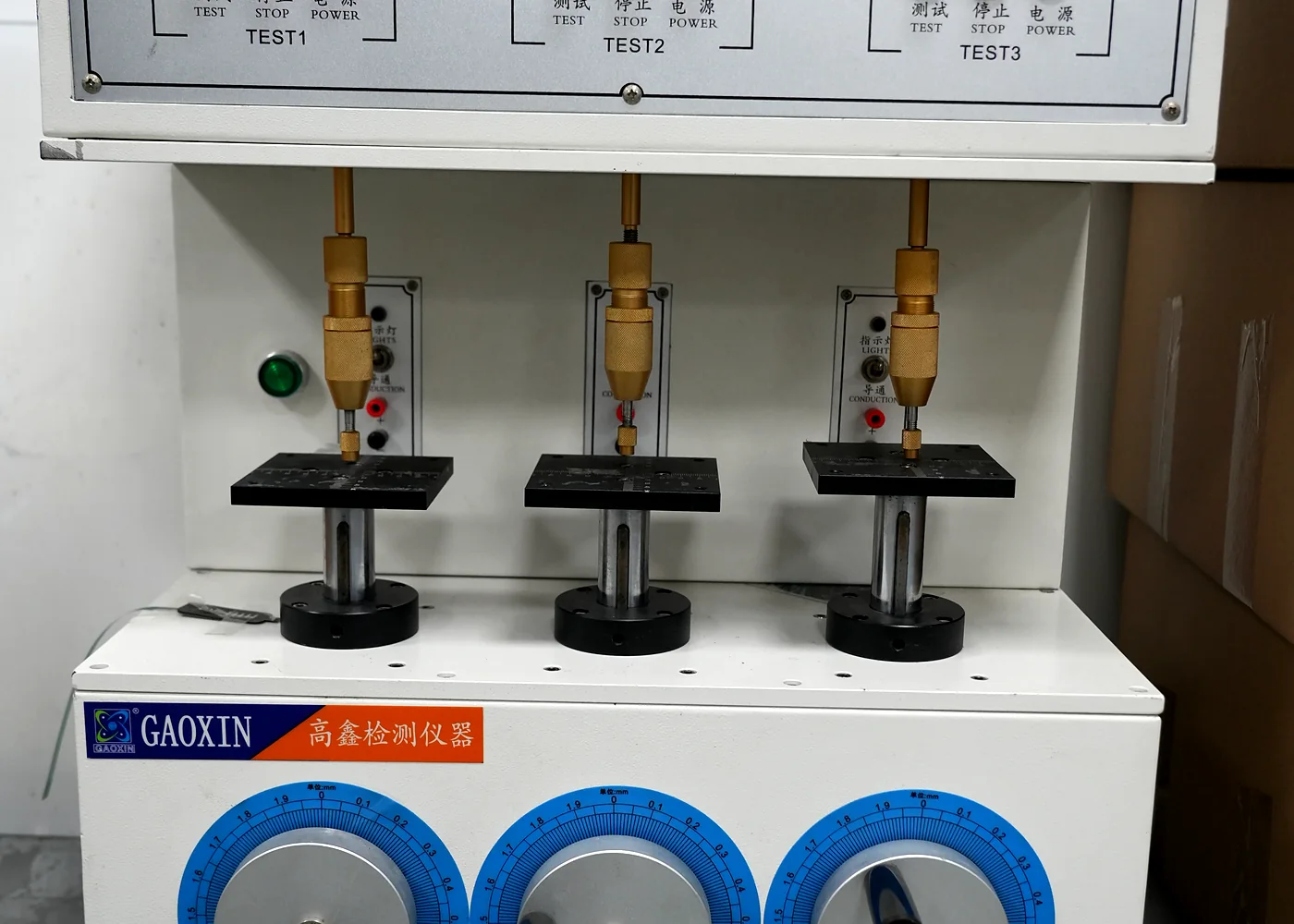
The same characteristic can be checked differently during engineering, first-article approval, and routine production. The gate should be named so evidence is not mistaken for a broader qualification claim.
Identify critical characteristics, drawing hierarchy, application exposure, mating parts, customer standards, and the evidence required with samples or shipments.
Check fit, graphics, key response, circuit behavior, lighting, connector routing, mounting, and the assumptions that must be verified in the customer's assembly.
Place incoming, in-process, final, and outgoing checks where defects can be detected before they pass into later operations or shipment.
Keep revisions, approved samples, material decisions, inspection criteria, deviations, and authorized changes connected to the active part number.
The table defines common evidence categories. Exact methods, quantities, conditions, and limits must be confirmed for the project rather than copied from another product.
| Risk to control | Useful evidence | Boundary to confirm |
|---|---|---|
| Open, short, wrong pinout, unstable contact | Continuity, isolation, circuit mapping, connector orientation, and agreed actuation checks | Circuit type, fixture, force, state, and customer electronics |
| Misalignment, poor fit, cosmetic rejection | Critical dimensions, layer registration, windows, embossing, artwork, surface, and approved sample review | Datum scheme, measurement method, viewing condition, and reference hierarchy |
| Water, cleaner, heat, UV, or mechanical exposure | A project-specific environmental matrix and post-exposure functional or visual checks | The complete enclosure, exposure direction, duration, chemistry, and acceptance owner |
| Lighting, touch, key feel, or assembly variation | Production-intent sample in the intended bezel, display, PCB, adhesive, and support stack | Subjective reference, instrumented value, tolerance, and customer system validation |
Provide the current evidence hierarchy and the risks the first sample must close. A vague request for 'full testing' does not define a repeatable release decision.
No. Routine electrical and visual checks may share a framework, but dimensions, key response, lighting, environmental exposure, sealing, documentation, and sample approval must follow the released construction and project risk.
An ingress rating belongs to the evaluated assembly and test configuration. Panel edges, windows, tail exit, connector path, adhesive land, gasket, enclosure joints, and exposure direction can all affect the result.
At minimum, review drawing and artwork revision, fit, critical dimensions, appearance, key behavior, circuit and connector, mounting, lighting or display interaction, and the environmental assumptions that the final assembly must validate.
Required report type, frequency, measured fields, lot traceability, format, and approval responsibility should be defined in the RFQ. Availability depends on the agreed inspection plan and quoted scope.
Send the drawing, assembly context, critical characteristics, failure concerns, and required records so the testing scope can be reviewed before quotation and tooling.
Share the project basics. JASPER will review the stack, materials, connector, quantity, and production risks.