
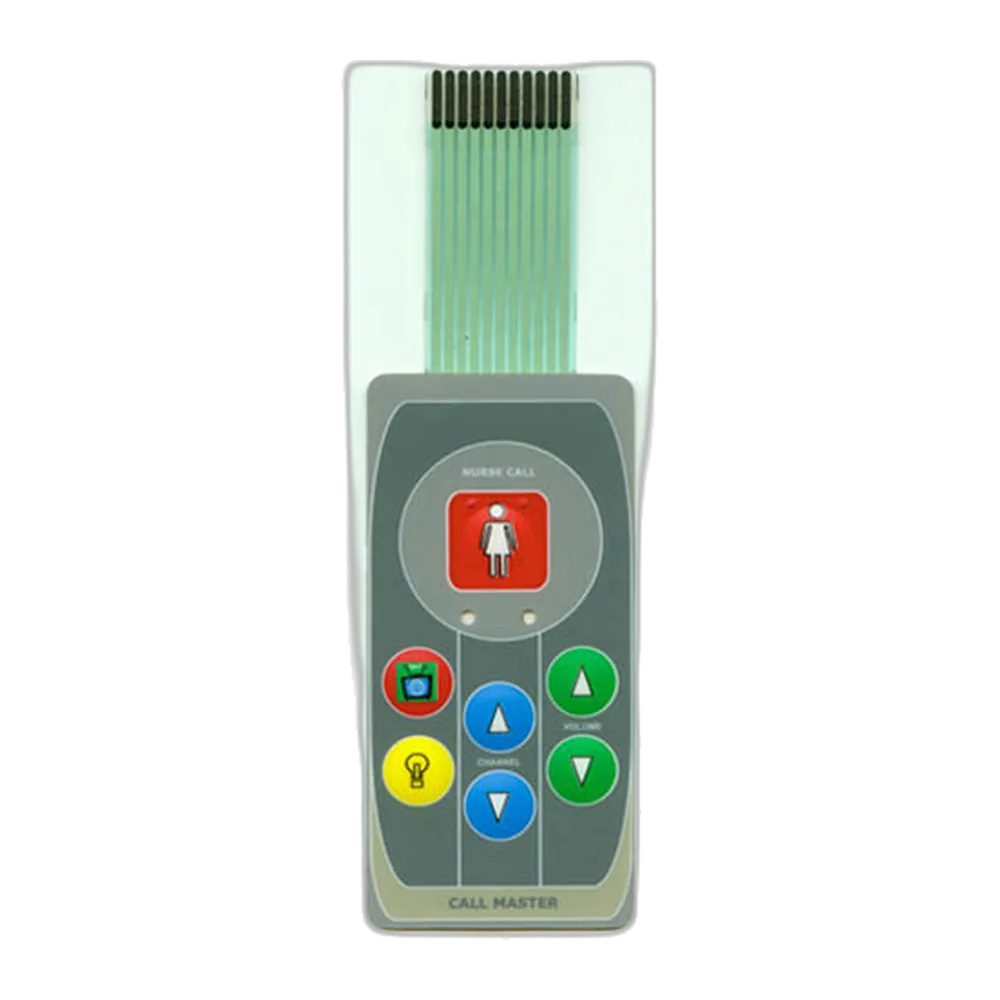
Tactile vs Non-Tactile Membrane Switches
Compare physical feedback, sound, key travel, stack height, and operator confirmation.
Read GuideTactile membrane switches use a controlled metal-dome and overlay stack to give the operator a clear snap response while closing the printed circuit beneath each key.
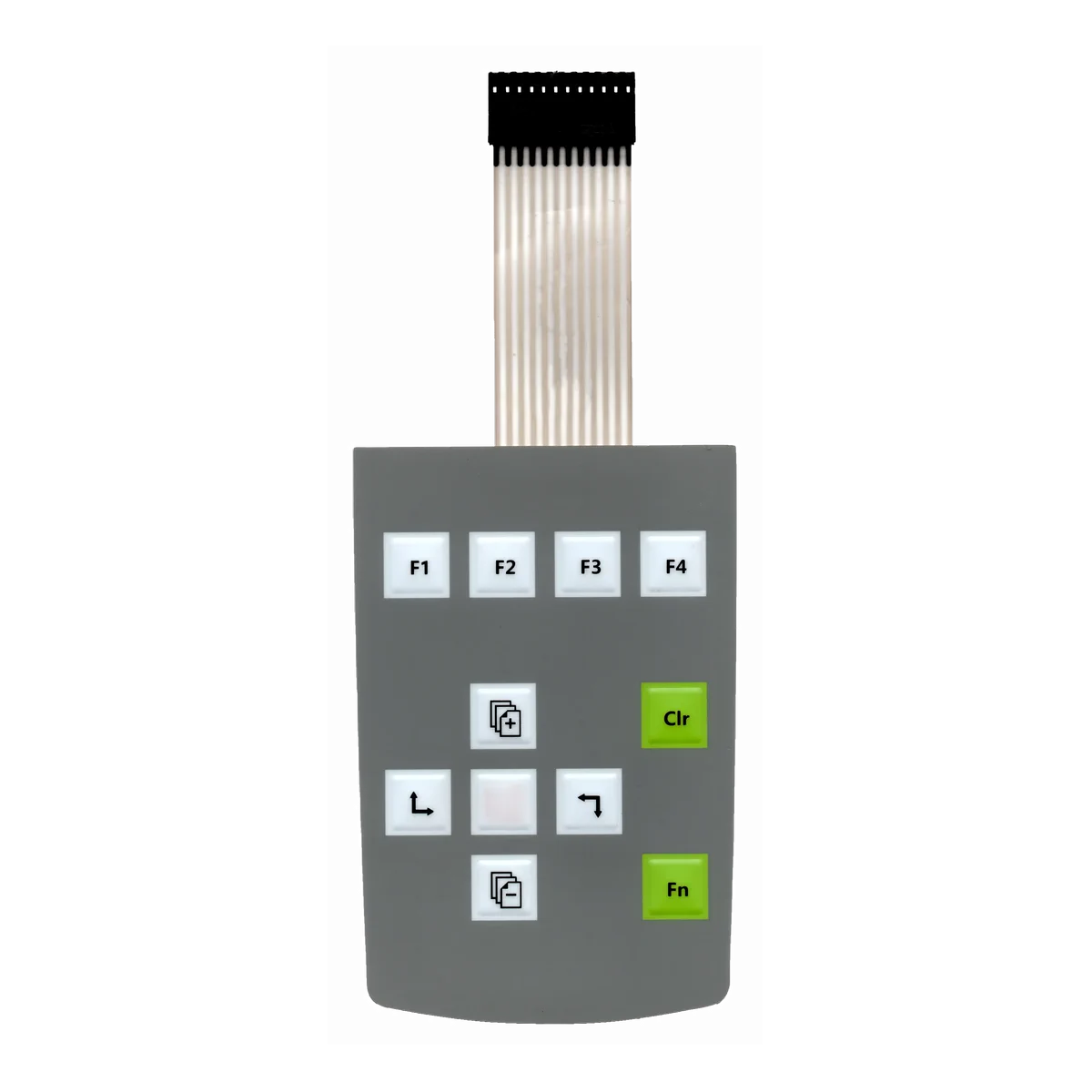
Dome Force + Key Feel Review
force curve | key geometry | enclosure support | sample validation
A tactile membrane switch is a low-profile control interface that gives a physical snap when a key is pressed. A stainless-steel dome sits over the circuit contact, while the overlay, embossing, spacer, retainer, adhesive, and enclosure support control how that snap feels in the finished product.
The useful design question is not only the nominal actuation force. Key diameter, travel, snap ratio, overlay stiffness, press location, audible click, and the support beneath the switch determine whether operators can confirm input without looking away from the equipment.
Do not approve tactile feel from a loose dome or an unbonded sample. The overlay, adhesive, support surface, and enclosure change the force curve the operator actually feels.
These construction choices are reviewed together so the approved sample reflects the installed product, not an isolated dome specification.
| Feature | Available Construction | Design Review Focus |
|---|---|---|
| Dome Geometry | Application-specific stainless-steel snap domes | Diameter, height, contact area, available key space |
| Actuation Feel | Light, medium, or firm tactile response | Full force curve, snap ratio, return, operator workflow |
| Key Travel | Low-profile travel controlled by the complete stack | Overlay stiffness, spacer, dome height, support surface |
| Key Geometry | Round, square, navigation, and custom printed key areas | Centered and edge press, glove use, spacing |
| Overlay and Embossing | Flat, pillow, rim, or dome-formed key areas | Stress radius, artwork registration, tactile location |
| Dome Retention | Retainer film, spacer pocket, or controlled dome array | Placement, rotation, venting, assembly handling |
| Circuit Contact | Printed silver, carbon, PCB, or FPC contact pads | Pad geometry, resistance, routing, test access |
| Sealing and Bonding | Perimeter adhesive, gasket features, sealed tail exit | Housing flatness, land width, cleaning, environment |
| Production Testing | Continuity, actuation, tactile, visual, and functional checks | Key-to-key consistency, high-use keys, installed fit |
Production Tip: identify high-use, safety-related, off-center, and gloved-operation keys before sample tooling so they can be evaluated separately.
Send the key map, force preference, housing support surface, display openings, tail direction, connector, environment, and expected quantity. We will review dome and stack conflicts before sampling.
Send Tactile Drawing
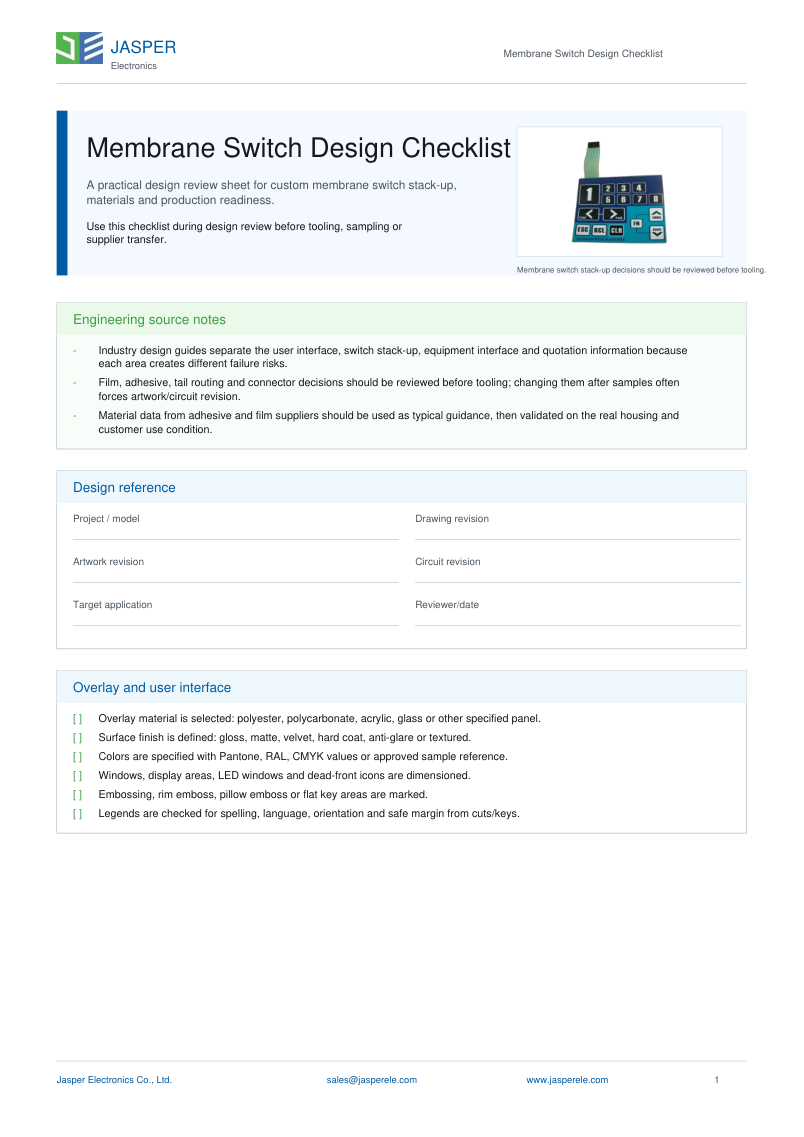
Use the checklist to review dome force, key size, embossing, spacer relief, circuit contacts, tail routing, adhesive, and installed sample acceptance.
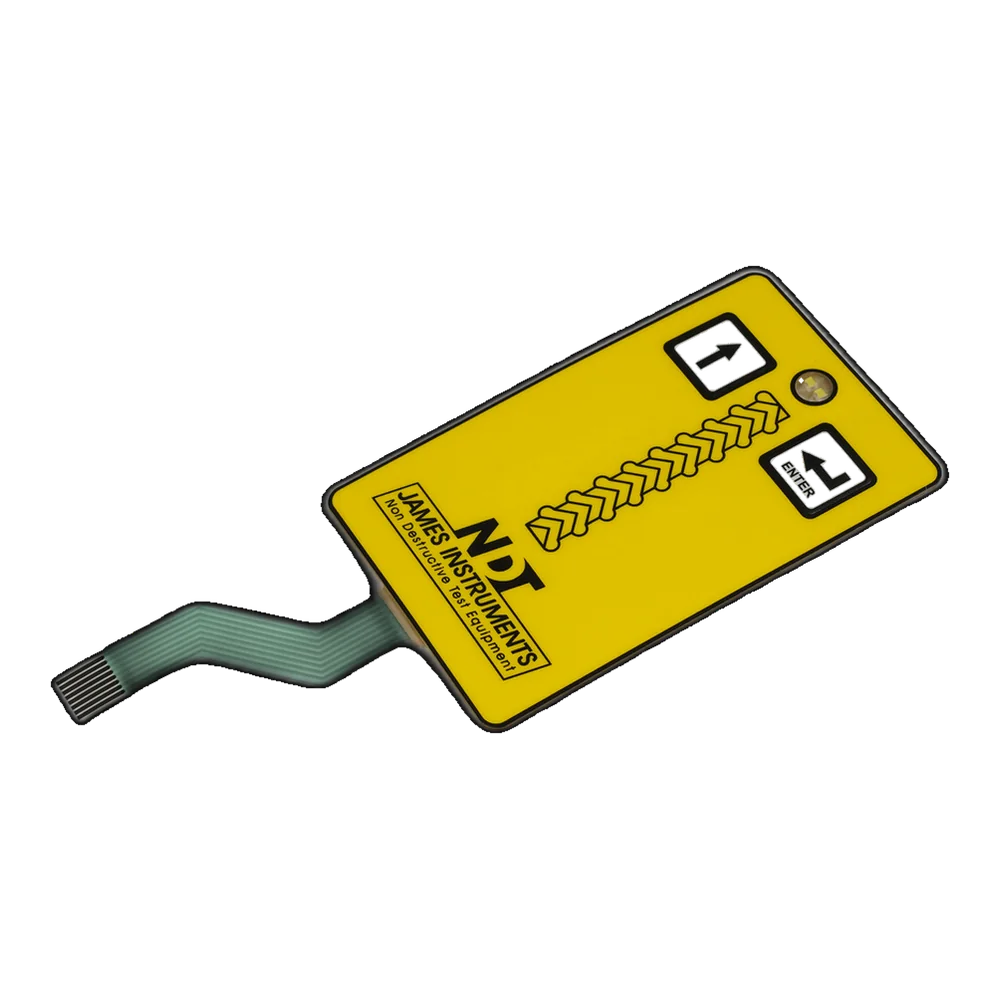
The dome cannot be selected independently. Overlay film, retainer, spacer, circuit pad, adhesive, and enclosure support all change the final force, sound, travel, and repeatability.
The visible key treatment should help the operator find the control without adding unnecessary stress or hiding the actual tactile zone.
| Flat Overlay over Dome | Clean face with tactile snap supplied by the dome below |
|---|---|
| Pillow Embossing | Raised key area that improves location and printed-key definition |
| Rim Embossing | Raised perimeter with a flatter center for legends or icons |
| Dome Embossing | Formed key shape coordinated with dome height and overlay strain |
| Selective Texture | Different key and panel textures for touch location and glare control |
| Backlit Tactile Keys | LED windows, dead-front icons, or illuminated legends around tactile areas |
The inspection plan should identify which keys are operator-critical and how tactile acceptance will be measured after the switch is bonded to its support.
Prototype builds prove key location, force curve, snap feel, sound, artwork, tail routing, and housing support. Production release adds controlled dome lots, revision records, test fixtures, cosmetic limits, and repeatability criteria.
Start Tactile ReviewPrepare the key map, force preference, enclosure support, display openings, circuit pinout, tail route, connector, environment, high-use keys, and sample acceptance method before tooling.
Request DFM Review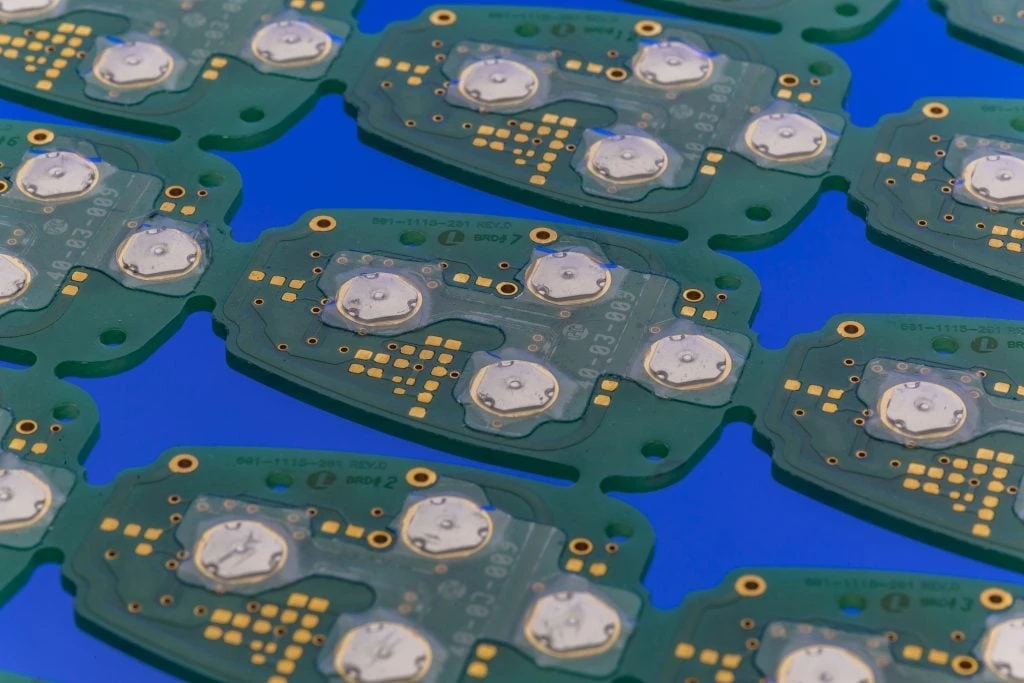
At rest, the metal dome is held above the circuit contact. Pressing the key increases force until the dome passes its snap point and collapses onto the contact pad. That rapid change in force gives the finger a clear actuation signal while closing the circuit.
When pressure is released, the dome returns to its original shape and opens the circuit. The difference between the peak force, snap point, return force, and travel creates the feel operators describe as light, crisp, firm, or soft.
The bonded assembly changes that response. Overlay film, embossing, retainer thickness, adhesive, venting, housing flatness, and support beneath the key must therefore be checked in the real enclosure before production approval.
Trip force is only one input. Tactile ratio, return force, travel, dome geometry, overlay stiffness, embossing, actuator size, venting, adhesive, and enclosure support determine the finished response.
Define an acceptable force range and measurement method on the bonded production-intent stack. Include travel, return, sound, glove use, press location, and any high-use or safety-related keys.
Yes, but large keys need deliberate actuator and support design. Review center and edge actuation, dome position, emboss boundary, spacer relief, venting, and enclosure flatness.
Excess over-travel, preload, deformation, trapped air, contamination, retainer misalignment, poor pad support, or an unsuitable actuator can prevent reliable return.
Define cycle count, actuation rate, load tool, press point, support surface, environment, electrical limits, force-curve intervals, and sample size. A loose dome rating does not prove the assembled switch.
Yes. Dome position, LED package, optical aperture, opaque ink, spacer, component height, light leakage, power, tail routing, and powered-state acceptance must be coordinated.
Compare physical feedback, sound, key travel, stack height, and operator confirmation.
Read Guide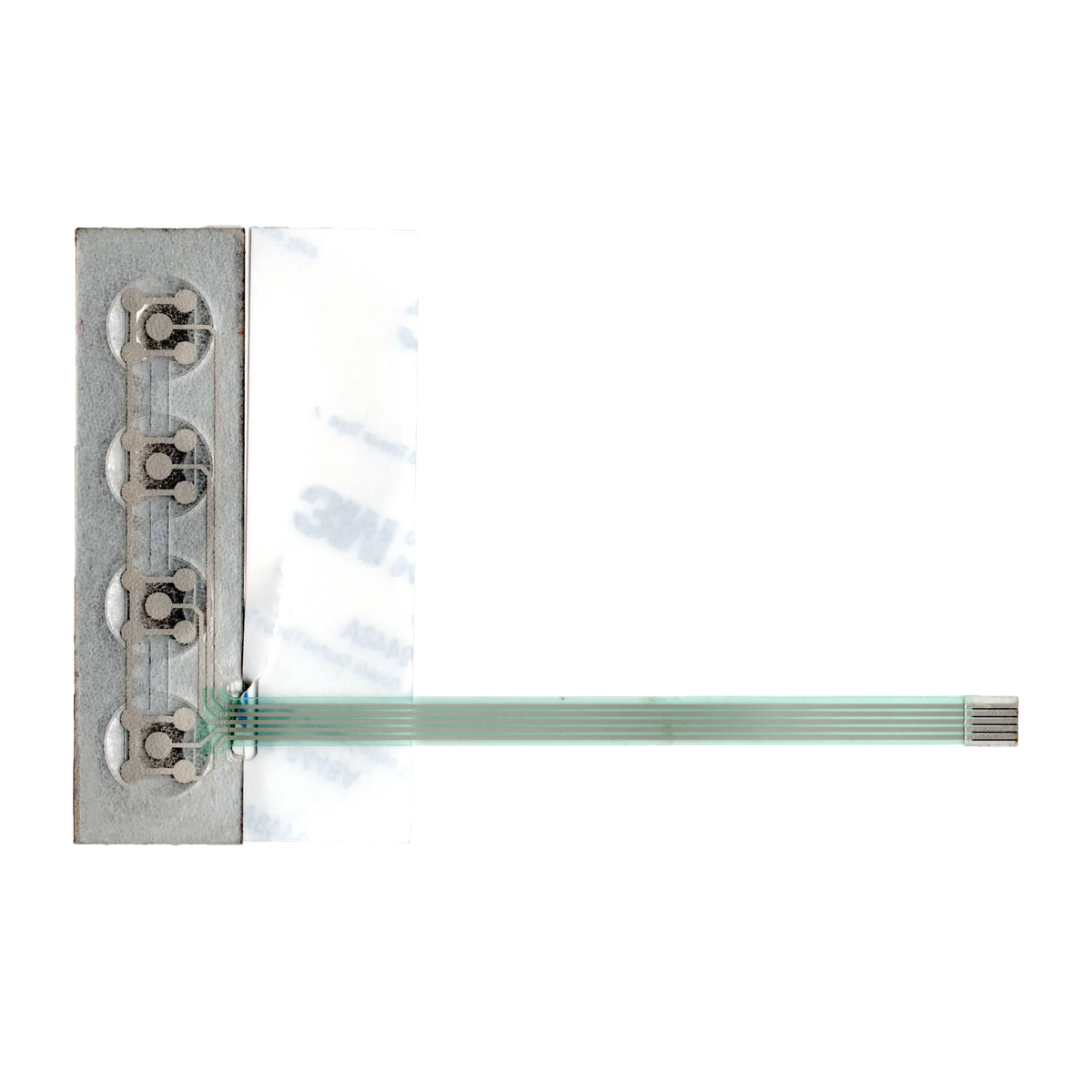
Review dome construction, contact geometry, force selection, and retainer options.
Read Guide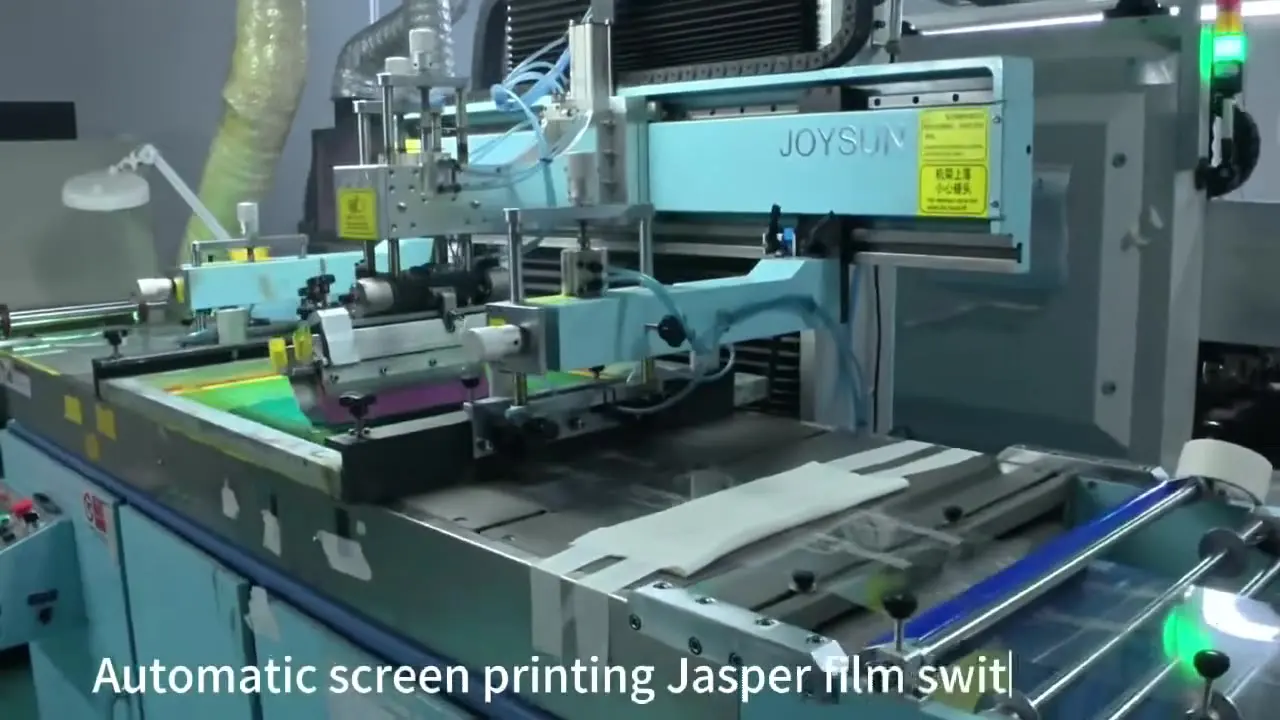
Prepare key, force, circuit, connector, environment, sample, and quantity inputs.
Read GuideSend your tactile-switch drawing for a dome, stack, and quotation review.
Get a Tactile Switch QuoteShare the project basics. JASPER will review the stack, materials, connector, quantity, and production risks.