
HMI hardware for medical and pharmaceutical equipment should be specified as one controlled interface stack, not as a display plus an assumed “medical-grade” label. The stack must match its users, gloves, cleaning chemicals, liquid exposure, lighting, enclosure, electrical interfaces, critical tasks, and service plan. A front-panel supplier can manufacture and verify the overlay, touch sensor, display, circuit, adhesive, shielding, and sealing features within an agreed scope. The medical-device or pharmaceutical-equipment manufacturer still owns system risk management, usability, software, ingress, EMC, cleaning or reprocessing validation, and regulatory acceptance of the finished equipment.
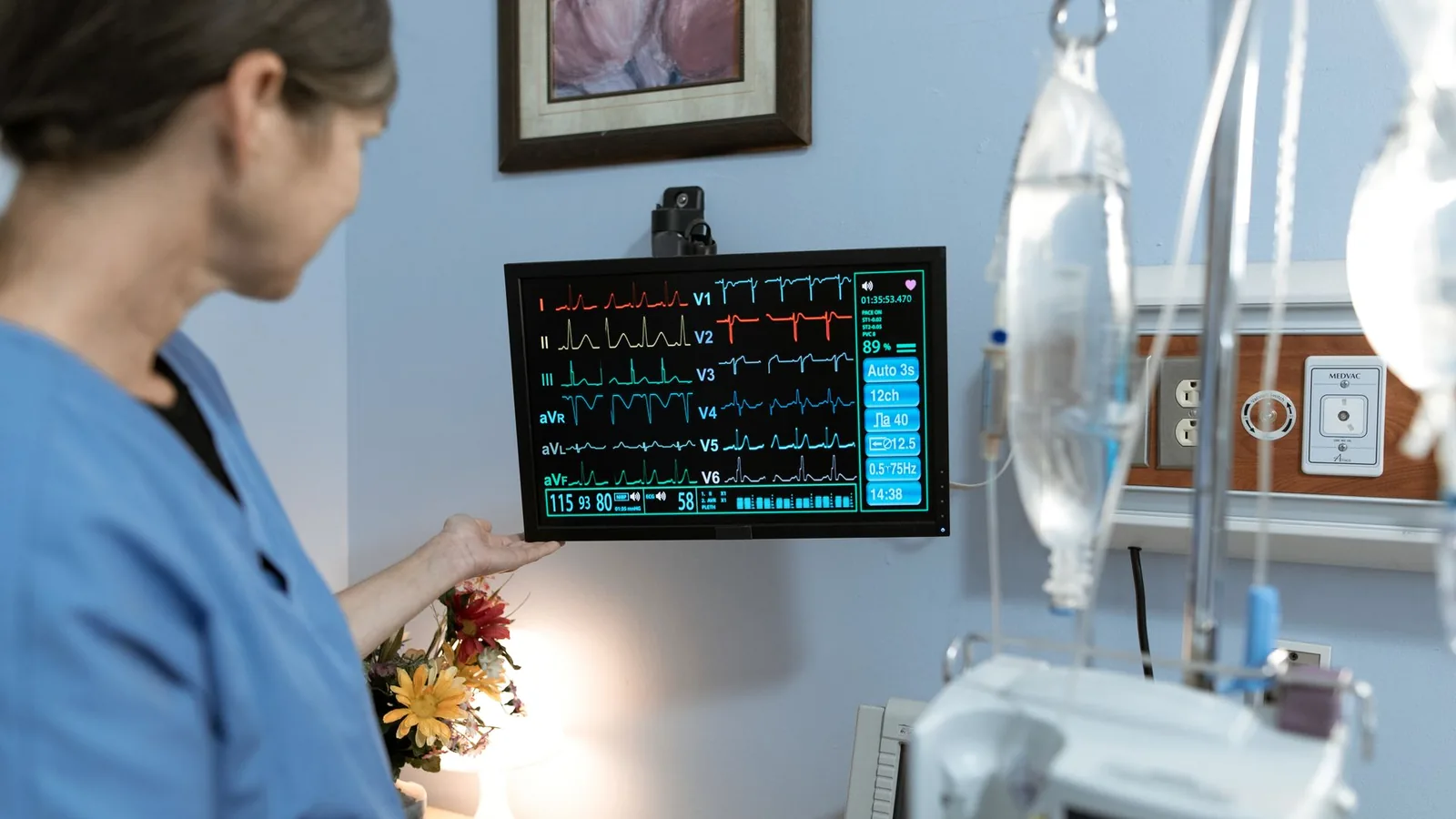
JASPER builds custom HMI assemblies from controlled drawings. The useful starting point is an application specification, not a catalog screen size.
Medical and Pharmaceutical HMI Decisions at a Glance
| Decision | Specify before design release | Common failure if omitted | Evidence needed before approval |
|---|---|---|---|
| Cleanability | Chemical name, concentration, contact time, wipe method, frequency, temperature, expected life | Haze, ink loss, cracking, swollen adhesive, trapped soil | Material coupons, printed samples, assembled-panel exposure, visual and functional acceptance criteria |
| Glove operation | Glove material, thickness, number of layers, dry/wet state, gestures, target size | Missed touches, false touches, unintended multi-touch | Installed-stack tuning file and task-based trials with production-representative gloves |
| Display stack | Active area, resolution, luminance, viewing cone, ambient light, cover, bond, interface | Low contrast, parallax, reflection, mura, touch noise | Optical inspection, viewing trials, display-interface and touch-noise tests in the host equipment |
| Leakage boundary | Target enclosure claim, panel cutout, gasket land, compression, fasteners, tail and connector exits | Fluid reaches electronics around an otherwise sealed face | Interface drawing, compression controls and testing on the representative assembled enclosure |
| Labels and controls | Critical legends, symbols, contrast, lighting, control spacing, tactile needs, artwork revision | Misreading, wrong control selection, lost warning, cleaning damage | Controlled artwork, inspection criteria and representative-user evaluation |
| Validation boundary | Component, subassembly and finished-equipment responsibilities | A component report is mistaken for a system compliance result | Responsibility matrix, traceable configurations, test protocols and final-device records |
What an HMI in the Pharmaceutical Industry Actually Includes
An HMI is a human-machine interface: every hardware, software and information element through which a person observes or controls equipment. For medical equipment, the U.S. Food and Drug Administration includes displays, indicator lights, switches, buttons, knobs, connectors, labeling and maintenance interactions within the device user interface. Its human-factors process begins with intended users, uses and use environments, not with a preferred touchscreen technology (FDA Human Factors Considerations).
The phrase HMI in pharmaceutical industry often refers to the operator interface on filling, inspection, packaging or laboratory equipment. Its visible hardware can include a display, touch sensor, membrane keys, dedicated controls, indicators, printed legends and an enclosure interface.
Electronic records, authorization, audit trails, recipes and signatures belong to the computerized system. FDA ties Part 11 to specified records and signatures under predicate rules; it is not a cover-glass property (FDA Part 11 Scope and Application). Drug-CGMP audit trails likewise depend on software, configuration and procedures (FDA Data Integrity Q&A).
For foundational hardware terminology, see What Is an HMI Panel? Hardware and OEM Guide. This application guide narrows the discussion to manufacturable front-panel hardware and the evidence an OEM needs to integrate it.
A Medical HMI Is a Layered Hardware System, Not Just a Touchscreen
A reliable medical or pharmaceutical HMI controls the relationships between layers. A suitable cover material can still fail when the edge seal, ink system, adhesive, display bond, circuit tail or enclosure land is wrong.
| Layer or boundary | Hardware function | Drawing or specification inputs | Typical interface risk |
|---|---|---|---|
| Cover lens or graphic overlay | User-contact surface; carries windows, legends and surface finish | Material grade, thickness, finish, edge treatment, cosmetic zone, cleaner list | Scratching, chemical haze, cracking, sharp edge, trapped soil |
| Printed graphics and functional coatings | Identifies controls and status; masks inactive areas | Ink system, print side, colors, opacity, registration, texture, transparent windows | Legend loss, poor contrast, window color shift, coating wear |
| Touch sensor or switch layer | Detects finger, glove, stylus or mechanical actuation | Technology, active zones, sensor pattern, force/tactile requirement, controller | Missed input, false input, drift, shorted switch, no tactile confirmation |
| Optical or spacing layer | Couples or separates cover, sensor and display | OCA/LOCA type or air gap, thickness, edge dam, bubbles and mura limits | Reflection, parallax, delamination, optical distortion, stress on display |
| Display module | Presents states, values, waveforms, prompts and alarms | Size, active area, resolution, interface, luminance, viewing cone, temperature, lifecycle | Unreadable state, connector mismatch, obsolescence, thermal shift |
| Circuit, shielding and interconnect | Carries switch, touch, LED and display signals to the host | Pinout, tail exit, bend zone, grounding, shield termination, cable length, connector retention | EMI sensitivity, ESD path, cracked trace, intermittent connector |
| Rear adhesive, gasket and enclosure land | Locates the HMI and closes the front-panel interface | Substrate, surface energy, cutout, land width, flatness, compression, fastener pattern | Peel, creep, leak path, over-compression, under-compression |
The stack drawing should distinguish the visible area, touch-active area, display active area, bond line, gasket land, keep-out zones, tail bend zone and service-removal direction. These are not interchangeable outlines. A decorative border that covers the display bezel may also carry adhesive or an edge seal, so its width affects optics, touch behavior and ingress performance at once.
Use common datums through the enclosure assembly; otherwise, accumulated display, sensor and print tolerances can separate the visible target from the sensed target. The HMI Panel Assembly Design Checklist helps document these interfaces before prototype release.
Cleanability Starts with Geometry and a Named Chemical Protocol
A “wipe-clean surface” is not an engineering requirement. The specification needs the named cleaning or disinfecting agent, concentration, preparation method, contact time, wipe material, mechanical action, frequency, surface temperature, rinse or drying step, and expected number of exposures. If multiple facilities may use different products, the OEM must define the permitted set and the worst credible process.
The FDA's reusable-device guidance recommends designing devices to facilitate effective cleaning and validating the final reprocessing instructions. Its published examples identify adjacent surfaces and other debris-retaining features as design concerns (FDA Reprocessing Guidance; FDA Reprocessing Factors). A front panel is simpler than an endoscope, but the principle transfers: deep bezels, exposed fasteners, unsealed windows, lifted overlay edges and narrow panel gaps create locations that are difficult to wipe and inspect.
A flush cover or one-piece overlay reduces face joints but not edge risk. Liquid can dwell at the perimeter, migrate along a damaged bond or enter a tail slot. Reverse printing protects graphics, yet the film, hard coat, ink and adhesive still require system-level compatibility work.
Material screening should proceed in stages:
- Supplier review: Retain the exact grade and published test conditions; reject known incompatibilities.
- Coupon exposure: Test the actual surface, coating, ink and adhesive; inspect color, haze, cracking, swelling and legibility.
- Converted-part exposure: Include printed windows, cut edges, embossing and adhesive cutouts.
- Assembled-panel exposure: Use representative enclosure material; check touch, switches, optics, adhesion and leakage indicators.
- Finished-equipment validation: The legal manufacturer validates the device's cleaning or reprocessing instructions.
“Antimicrobial” is not a substitute for cleanability. A coating claim does not prove that soil can be removed, that a disinfectant reaches every surface, or that the finished equipment's reprocessing instructions are effective. Treat any antimicrobial feature as a separately evidenced material property with its own scope.
Glove and Wet Operation Require Stack-Specific Touch Tuning
Glove performance is a system result. The glove changes the signal; the cover lens, optical adhesive, sensor pitch, display noise, grounding, controller, firmware and environmental moisture determine whether the signal remains distinguishable.
Infineon identifies glove material, trapped air, compression, humidity and moisture as signal variables, alongside cover thickness, sensor pitch, controller noise discrimination and tuning (Infineon industrial touchscreen design paper). “Works with gloves” therefore needs a controlled glove description, layers, dry/wet state and required gestures.
| Control option | Where it can fit | Main advantage | Main limitation to validate |
|---|---|---|---|
| Projected-capacitive touch (PCAP) | Flush glass or polymer fronts needing gestures and cleanable geometry | Multi-touch and sealed-face integration are possible with a suitable controller and stack | Glove signal, droplets, palm/large-object rejection, display noise, ground condition and tuning revision |
| Analog resistive touch | Single-point or stylus tasks where pressure input is acceptable | Pressure can be applied by a finger, glove or stylus | Flexible top-layer wear, optical appearance, actuation force, calibration and gesture limits |
| Membrane switches | Dedicated functions, tactile confirmation, blind location or fallback controls | Fixed positions, optional tactile domes and printed legends | Actuation force, dome feel, overlay life, spacing, cleaning around embossing and switch-tail routing |
| Hybrid touch plus physical controls | Safety-relevant or high-frequency tasks that should not rely on one interaction mode | Separates configurable screen content from persistent, locatable controls | Task allocation, accidental actuation, layout consistency and full user-interface validation |
For Microchip's named mXT225T, the product brief states multi-finger glove touch through up to 1.5 mm and single-finger glove touch through up to 5 mm, subject to stack design. It also describes specified modes for droplets up to 22 mm (mXT225T product brief). These are device-specific conditions, not medical-system guarantees.
Analog resistive touch uses pressure to join conductive layers. Analog Devices identifies gloves, precise single-point input and passive-stylus work as relevant use conditions for resistive technology (Analog Devices resistive-touch article). Lifecycle remains part of the component selection.
Prototype trials should cover critical targets, edge touches, required gestures, droplets, power states and expected grounding with production-representative gloves. Record the sensor, controller, firmware, tuning file, display, cable and host configuration.
Display and Touch Stack Must Be Specified as One Optical and Electrical System
Specify more than display diagonal and resolution. Capture the viewing cone, ambient illumination, critical-content contrast, reflections, color use, warm-up and calibration responsibility for the real operator position.
An air gap supports service but adds reflective interfaces. Optical bonding fills the gap; 3M states that its LOCA 1088 construction reduces reflection and increases transmission, while labeling its typical properties as non-specification data (3M LOCA 1088 technical data). The decision must also address cure, bubbles, ink steps, stress, repair and aging.
A cover, film, adhesive or display change can alter touch signal-to-noise behavior. Draw grounding and shield termination, then test the host configuration. IEC 60601-1-2 addresses medical electrical equipment or systems, so bench evidence is not a final EMC result (IEC 60601-1-2). See High-Performance HMI Hardware Design for related hardware decisions.
Diagnostic-image interpretation is separate from equipment control. If the screen supports a diagnostic claim, the OEM must define its imaging, calibration and quality-control requirements; brightness and resolution alone are insufficient.
Leakage Protection Is an Enclosure Boundary, Not a Front-Panel Sticker
IEC 60529 classifies the protection provided by an electrical-equipment enclosure against access, solid objects and water. It does not turn an adhesive ring or cover lens into a rating for the finished machine (IEC 60529). NEMA's Technical Bulletin 123 expresses the installed-system principle plainly: the overall rating is limited by the lowest-rated component in the conduit-fitting-enclosure chain, and NEMA enclosure types are not directly interchangeable with IP codes (NEMA Technical Bulletin 123).
For an HMI, the front boundary includes more than the visible face:
- cover-to-bezel or overlay-to-carrier bond;
- panel cutout, flange and gasket land;
- gasket material, joint, width and compression range;
- carrier flatness, surface finish and fastener spacing;
- display or switch-tail exit;
- connector, cable gland, vent and service opening;
- enclosure seams and any nearby control penetrations.
Gasket thickness does not define compression. Draw the free and compressed conditions, land, stops or torque controls, and surface tolerances. Excess compression can set the gasket or distort a display; insufficient compression leaves a leak path. Adhesive seals also depend on substrate preparation, pressure, continuity and dwell.
Do not transfer a panel-level report to a changed enclosure. Moving a fastener, widening a cutout, changing paint, substituting foam, rerouting a tail or adding a nearby opening can alter the leakage path. Test the representative finished boundary in the specified mounting orientation and condition, including any preconditioning required by the equipment program.
Labels and Human Factors Convert Hazards into Physical Design Inputs
Legends, symbols, control spacing, tactile cues, feedback and display visibility are risk controls only when the intended user can perceive and use them under realistic conditions. FDA's August 2026 human-factors guidance frames evaluation around intended users, uses and use environments and focuses on reducing use errors that could cause harm (FDA Human Factors Guidance). IEC 62366-1 specifies a manufacturer process for safety-related usability engineering; it is not a certificate that attaches to a keypad or touchscreen (IEC 62366-1).
Control artwork like a circuit revision: master file, colors, minimum features, registration, window opacity, inspection lighting and acceptance sample. FDA identifies small type, insufficient contrast, obscuring design and overcrowding as causes of lost prominence (FDA General Device Labeling Requirements).
ISO 15223-1:2021 covers medical-device symbols on the device, packaging or accompanying information (ISO 15223-1). FDA permits stand-alone labeling symbols only under defined conditions, including applicable glossary treatment; adjacent text remains an option (FDA Symbols FAQ). Do not invent near-match icons.
Application-risk matrix
| Use condition | Credible HMI failure path | Hardware control input | Verification evidence | Final decision owner |
|---|---|---|---|---|
| Repeated disinfectant wiping | Haze, ink loss, edge lift or cracked surface obscures information | Named chemical protocol; compatible grade, ink and adhesive; cleanable geometry | Coupons, converted parts and assembled-panel exposures | Device/equipment manufacturer with material and HMI suppliers |
| Wet screen during operation | False touch changes a value or acknowledges an alarm | Droplet behavior, target spacing, controller mode, dedicated control allocation | Wet-state task trials in the host configuration | Device usability and risk-management teams |
| Double gloves | Critical target does not register | Glove definition, cover stack, sensor/controller and tuned threshold | Representative-user trials with production-representative gloves | Device usability team; supplier supports tuning evidence |
| Bright or oblique viewing | Status, decimal point or alarm priority is misread | Viewing cone, contrast, anti-glare strategy, font and critical-state design | Simulated-use evaluation under specified lighting and angles | Device usability and display-system owners |
| Liquid at panel edge | Fluid reaches a circuit or display connector | Continuous seal path, gasket compression, tail exit and enclosure controls | Representative assembled-enclosure ingress test | Finished-equipment manufacturer |
| Cleaning wear on a legend | Control identity or warning becomes ambiguous | Reverse print, protected graphics, contrast and durability criteria | Artwork inspection plus exposure and abrasion protocol | Labeling, quality and device design owners |
| EMC disturbance | Touch freezes, jumps or generates an unintended event | Grounding, shield termination, cable routing, filtering and fault handling | Subsystem diagnostics and final-equipment IEC 60601-1-2 program | Medical electrical equipment manufacturer |
| Component substitution | Touch, optics or seal changes without risk review | Controlled BOM, approved alternatives, tuning/configuration ID and change notice | Delta verification and documented change assessment | OEM change-control owner |
HMI Ergonomics and Human Factors for Industrial Equipment adds context for reach, viewing and control grouping. Medical-device critical tasks still require the manufacturer's own use-related risk analysis and validation.
Component Verification Cannot Replace Finished Medical-Device Validation
Component evidence supports, but cannot replace, final validation. ISO 14971:2019 defines medical-device life-cycle risk management. IEC 60601-1 addresses medical electrical equipment basic safety and essential performance, with other standards supplementing it where applicable (ISO 14971:2019; IEC 60601-1).
The FDA Quality Management System Regulation became effective on February 2, 2026, incorporates ISO 13485:2016 by reference, and applies within its stated finished-device scope (FDA QMSR). It does not make every component “FDA approved.”
| Evidence level | Suitable evidence | What it can establish | What it cannot establish alone |
|---|---|---|---|
| Material / component | Grade data sheet, supplier declaration, dimensional report, controller brief, optical inspection | Identity and measured attributes under stated conditions | Installed cleanability, usability, ingress, EMC or medical-device compliance |
| Converted HMI assembly | Controlled drawing, BOM, artwork, tuning/configuration ID, functional test, targeted environment tests | Conformance of the supplied assembly to agreed requirements | Safety and effectiveness of the finished device or pharmaceutical process |
| Integrated prototype | Representative enclosure, host electronics, cables, software build, actual gloves and cleaning protocol | Interface behavior and failure discovery in a traceable configuration | Production validation unless protocol, sample rationale and configuration are adequate |
| Finished equipment | Applicable risk, usability, electrical safety, EMC, ingress, cleaning/reprocessing and software records | Evidence for the manufacturer's device/equipment requirements and submission strategy | Claims beyond the tested configuration, conditions and applicable regulatory scope |
For 3M's specific 7997MP construction, the supplier reports no significant bond reduction after seven days at 32 °C and 90% RH, 100-hour room-temperature water data, and bond build toward maximum after 72 hours (3M 7997MP technical data). The data do not qualify another adhesive, substrate or assembly.
Start testing and validation planning before tooling. A prototyping and sample approval build should freeze the display, sensor, controller, tuning, materials, artwork, cable and enclosure interface. Later substitutions require documented impact assessment and delta verification.
Project-Input Checklist for Drawing Review and RFQ
A useful HMI proposal needs enough information to define the stack and separate supplier evidence from finished-equipment responsibilities. Provide the following inputs before requesting firm pricing:
- Equipment and market: Device or machine function, target countries, intended operators, use environment, installation orientation and whether the screen supports control, monitoring or diagnostic interpretation.
- Display: Diagonal, active-area and outline limits, resolution, display interface, luminance/readability targets, viewing angles, ambient light, temperature, warm-up, lifecycle and approved-alternative policy.
- Front-panel drawing: Enclosure cutout, datums, visible and touch-active areas, gasket land, flatness, surface finish, fastener pattern, keep-outs, available depth and service-removal direction.
- Interface stack: Cover or overlay material and thickness, surface finish, printed windows, touch technology, sensor/controller, optical bond or air gap, display, circuit, shielding, connector, tail exit and host pinout.
- Users and inputs: Glove material, thickness and layers; dry/wet condition; passive stylus; gestures; critical target sizes; tactile requirements; dedicated or redundant controls.
- Environment: Cleaning and disinfecting agents with concentration, contact time, wipe method and frequency; splash or wash exposure; humidity; condensation; temperature; UV; impact; vibration; ESD and expected electromagnetic environment.
- Labels and artwork: Required text, regulated symbols, languages, colors, contrast, backlighting, artwork owner, revision method, inspection criteria and approved samples.
- Evidence package: Required material declarations, dimensional and functional records, traceability, prototype reports, configuration identifiers, change notification and retention expectations.
- Commercial inputs: Prototype quantity, forecast annual volume, program life, ramp profile, packaging, delivery region and requested build stage. Custom HMI panel pricing cannot be meaningful without these configuration and volume inputs.
Teams with a current drawing can send drawings for engineering review before finalizing the RFQ. Remove unrelated patient data, credentials and confidential records; the HMI drawing, interface stack, environment and volume are the relevant engineering inputs.
Frequently Asked Questions
What does HMI stand for in pharmaceutical manufacturing?
HMI stands for human-machine interface. In pharmaceutical manufacturing, it is the operator-facing combination of display, touch or physical controls, indicators, labels and software screens used to observe or control equipment. JASPER's scope is the manufacturable front-panel hardware; PLC/SCADA logic, electronic records, audit trails and Part 11 system validation remain with the equipment program.
Is projected-capacitive or resistive touch better for medical equipment?
Neither technology is universally better. PCAP fits flush, multi-touch interfaces when its controller and installed stack are tuned for the defined gloves, moisture and noise. Resistive touch accepts pressure from a finger, glove or stylus and can suit precise single-point tasks, but its flexible surface, force, optics, calibration and product lifecycle require evaluation.
Can a medical touchscreen work with nitrile or surgical gloves?
Yes, a suitable touchscreen can work with defined nitrile or surgical gloves, but “glove compatible” is incomplete. Specify glove material, thickness, layers, dry or wet state, target size and gestures. Then tune and test the production-intent cover, sensor, controller, display, grounding, cable and host electronics with representative users and gloves.
Does a sealed HMI front panel give the finished enclosure an IP rating?
No. A sealed face can support an enclosure ingress strategy, but the finished boundary also includes the panel cutout, gasket land and compression, fasteners, tail exit, connectors, enclosure seams and nearby penetrations. The claimed enclosure configuration must be tested to the applicable method; a component report cannot be transferred automatically to a different assembly.
How should disinfectant resistance be specified for an HMI panel?
Name the chemical, concentration, preparation, contact time, wipe material and force, frequency, temperature, rinse or drying step, and total expected exposures. Qualify the exact surface, coating, ink, adhesive, cut edge and enclosure interface through coupon, converted-part, assembled-panel and finished-equipment testing with defined visual and functional acceptance criteria.
Does optical bonding always improve a medical HMI display?
Optical bonding can reduce reflections at internal interfaces and eliminate an air cavity, but it is not always the best system choice. The OEM must weigh readability against cure control, bubbles, ink steps, display stress, mura, repairability, edge sealing, material aging and touch sensitivity. Verify the actual bonded stack under its lighting and environmental conditions.
Which standards can apply to medical HMI hardware?
Potentially relevant documents include ISO 14971 for medical-device risk management, IEC 62366-1 for safety-related usability, IEC 60601-1 and applicable collateral or particular standards for medical electrical equipment, IEC 60601-1-2 for EMC, IEC 60529 for enclosure ingress classification, and ISO 15223-1 for medical-device symbols. Applicability and compliance belong to the finished-device program.
What information is needed to price a custom pharmaceutical HMI panel?
Provide the display size and interface, front-panel drawing, complete layer stack, touch and glove requirements, cleaning chemicals, enclosure/sealing target, environment, labels, evidence package, prototype quantity and annual volume. Without those inputs, a price would hide major assumptions about materials, tooling, controller tuning, optical bonding, verification and lifecycle control.
References
- U.S. Food and Drug Administration. Applying Human Factors and Usability Engineering to Medical Devices. August 2026.
- U.S. Food and Drug Administration. Human Factors Considerations.
- U.S. Food and Drug Administration. Reprocessing Medical Devices in Health Care Settings: Validation Methods and Labeling. March 2015.
- U.S. Food and Drug Administration. Quality Management System Regulation. Updated February 2, 2026.
- International Organization for Standardization. ISO 14971:2019, Medical devices — Application of risk management to medical devices. Confirmed 2025.
- International Electrotechnical Commission. IEC 62366-1:2015, Medical devices — Part 1: Application of usability engineering to medical devices, including Amendment 1:2020.
- International Electrotechnical Commission. IEC 60601-1, consolidated edition 3.2. 2020.
- International Electrotechnical Commission. IEC 60601-1-2:2014+A1:2020.
- International Electrotechnical Commission. IEC 60529, Degrees of protection provided by enclosures (IP Code).
- National Electrical Manufacturers Association. Technical Bulletin No. 123: NEMA and IP Ratings. March 8, 2023.
- International Organization for Standardization. ISO 15223-1:2021, Medical devices — Symbols to be used with information to be supplied by the manufacturer.
- U.S. Food and Drug Administration. Use of Symbols in Labeling: Frequently Asked Questions.
- U.S. Food and Drug Administration. Part 11, Electronic Records; Electronic Signatures — Scope and Application.
- Microchip Technology. mXT225T-A Touchscreen Controller Product Brief 40002004A.
- Infineon Technologies. Industrial Capacitive Touchscreen Design Made Simpler. 2022.
- 3M. Printable Liquid Optically Clear Adhesive 1088 Technical Data. September 2013.
- 3M. Membrane Switch Product with Adhesive 200MP 7997MP. September 2024.
- Analog Devices. AD7879 Controller Enables Gesture Recognition on Resistive Touch Screens.
JASPER manufactures HMI and front-panel assemblies to customer-approved requirements. This guide does not claim that a JASPER component is a cleared medical device or that component evidence replaces the legal manufacturer's finished-device or pharmaceutical-system validation. To discuss a defined program, request an engineering quote with the display size, front-panel drawing, interface stack, environment and annual volume.
Bring the drawing, stack and operating conditions
JASPER engineering will review the interfaces, open risks and evidence required for a production quote.