
Architecture and ownership
Define analyte and sample context, working/reference/counter architecture, electrode count, functional layers, fluid path, electronics, calibration owner, production quantities, and regulated-device boundary.
A printed biosensor electrode turns electrochemical architecture into repeatable geometry. JASPER supports the printing and conversion of custom working, reference, counter, routing, dielectric, tail, connector, adhesive, spacer, and liner features when the OEM controls the analyte chemistry, electronics, calibration, and finished-device validation.
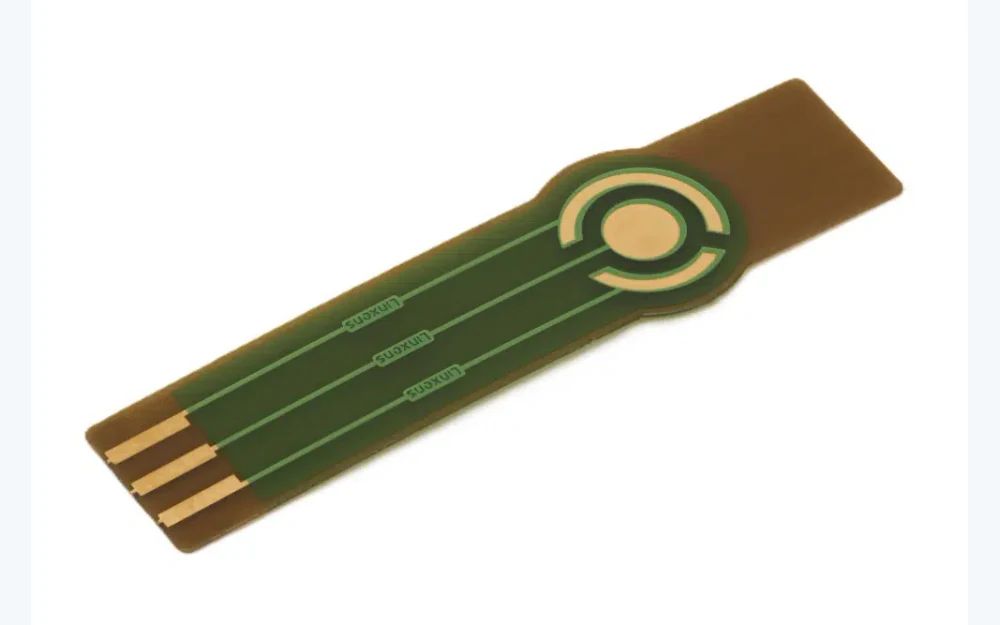
JASPER can print and convert biosensor electrode substrates to customer artwork and material specifications. The OEM or designated technology owner defines the biorecognition layer, reagent, membrane, sample path, analyte, reference method, calibration, electronics, algorithm, clinical or analytical claim, and regulatory strategy. Manufacturing review focuses on whether the printed geometry and converted stack can be made, protected, inspected, and repeated.
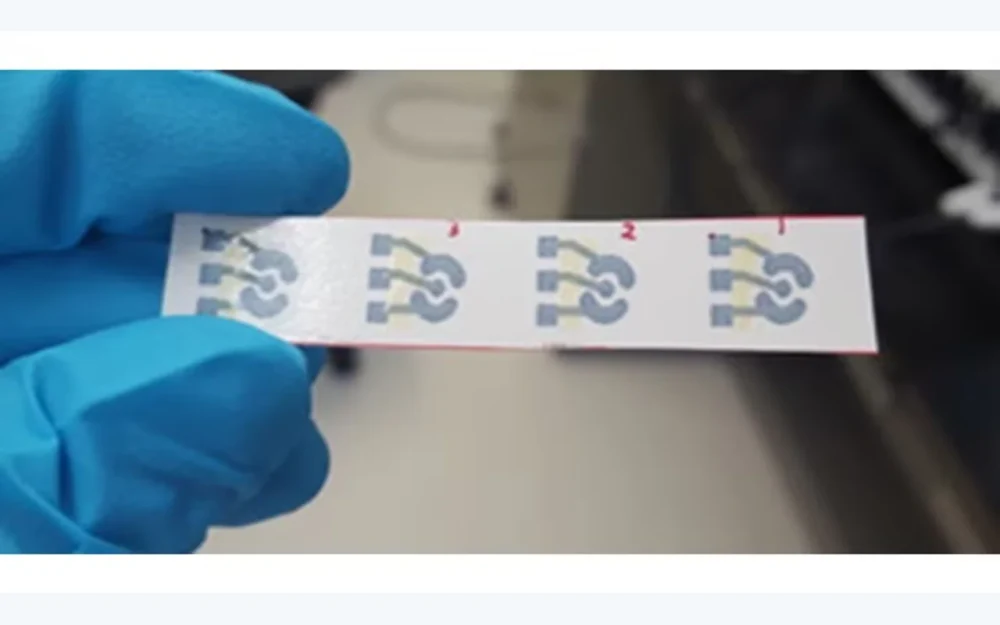
The work is most efficient when the manufacturing boundary is agreed before functional chemistry or microfluidics are committed to an incompatible substrate or process.
Define analyte and sample context, working/reference/counter architecture, electrode count, functional layers, fluid path, electronics, calibration owner, production quantities, and regulated-device boundary.
Release substrate, inks, print order, cure, dielectric, electrode areas, routing, connector pads, tail, spacer, adhesive, liner, outline, registration, protection, cleanliness, and handling requirements.
Build agreed printed and converted samples, inspect geometry and circuit characteristics, protect interfaces, and correlate component evidence with the OEM's chemistry, fluidic, electronic, and analytical evaluation.
Lock active files, materials, lots, process windows, inspection methods, approved samples, packaging, storage, traceability, change notification, and the handoff to downstream functional processing.
A measured response can change because of print geometry, chemistry, sample handling, electronics, calibration, or data processing. The validation owner for each layer must be stated.
| System layer | Manufacturing inputs | Validation owner to confirm |
|---|---|---|
| Printed electrode | Material identity, area, spacing, thickness or deposition target, cure, surface condition, registration and circuit | JASPER inspection plus OEM correlation criteria |
| Functional chemistry | Reagent, enzyme or recognition layer, membrane, reference chemistry, deposition, stabilization and storage | OEM or named chemistry/process owner |
| Sample and fluid interface | Volume, path, spacer, wick, vent, reservoir, contamination control, seal and timing | OEM fluidic and intended-use validation |
| Electronics and result | Bias, excitation, measurement range, connector, calibration, compensation, algorithm, reference method and claim | OEM finished-device and analytical-performance validation |
Sensitive chemistry can remain confidential while the print and conversion boundary is still defined clearly enough to evaluate manufacturability.
Useful checks can include dimensions, registration, print appearance, conductor continuity, isolation, connector geometry, electrode area, dielectric coverage, surface condition, protection, and agreed process records.
Not from the printed component alone. Accuracy and other analytical claims depend on chemistry, sample path, electronics, calibration, algorithm, reference method, manufacturing variation, storage, and intended use under the OEM's validation plan.
Send the electrode architecture, material system, conversion stack, sample interface, electronics boundary, quantities, and correlation criteria for review.
Share the project basics. JASPER will review the stack, materials, connector, quantity, and production risks.