
Home / Case Studies / Medical Device Membrane Switch
Anonymous engineering case
Medical Device Membrane Switch for a Wipe-Clean Equipment Interface
The difficult part of a medical equipment interface is rarely the key matrix by itself. The visible surface, cleaning routine, tactile response, adhesive, enclosure and inspection plan all meet in the same thin assembly.
This page shows how those decisions can be reviewed before quotation and sampling. It is an anonymous project type, not a published customer result.
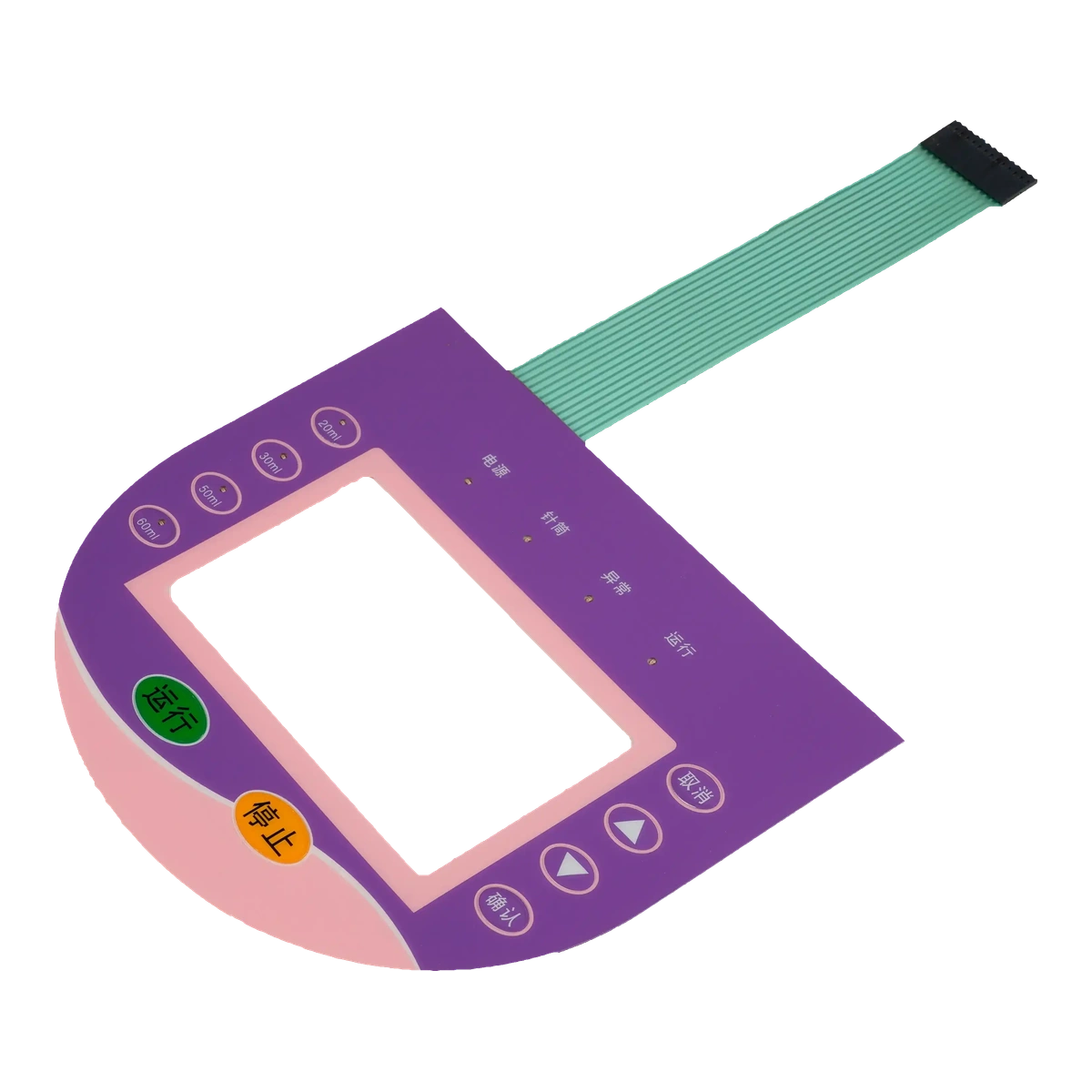
What this example does and does not claim
The project frame is based on common OEM review questions. It does not name a customer or device, and it does not claim medical approval, sterilization compatibility, chemical resistance, a protection rating, service life, order volume or delivery result. Those points require project-specific evidence.
Project frame
A useful case begins with the decisions that are actually open. These five points would shape the first drawing review.
The switch can pass an electrical check and still fail the sample review
For this type of interface, buyers do not approve the circuit in isolation. They look at the front surface under normal light, read small legends, press the keys with the intended hand position, wipe the panel, fit it to the housing and inspect the edge where the tail leaves the assembly.
A dome that feels acceptable on a loose sample can feel different once the overlay, spacer and housing are combined. A rear adhesive that bonds well to one flat panel may behave differently on a textured coating, a low-surface-energy plastic or a shallow recess. A clear window can make a small particle or print-registration error far more visible than the same defect on an opaque area.
That is why the first useful conversation is not about choosing a film from a catalogue. It is about how the complete interface will be used, cleaned, mounted and judged.

What needed to be reviewed together
None of these decisions is especially exotic. The risk comes from approving them in separate meetings and discovering their interaction after tooling.
Front film and surface finish
Film type, hard coat, gloss or texture affect wiping, glare, fingerprints, abrasion expectations, embossing and how the operator reads the panel.
Printing and visible windows
Subsurface graphics protect the ink, but color reference, opacity, registration, small legends and clear windows still need agreed visual limits.
Key response
Dome force, travel, embossing, spacer thickness and the enclosure behind the switch determine how a key feels in the assembled device.
Adhesive and housing
Rear adhesive must be reviewed against the actual housing material, coating, texture, recess depth, edge geometry and installation pressure.
Tail, connector and display
Tail exit, bend route, stiffener, connector engagement, LED positions and display windows compete for space inside a compact front panel.
Cleaning requirements belong in the drawing review
The surface cannot be described as cleanable until the expected exposure is specific enough to evaluate. The buyer owns the use condition; the manufacturer helps translate it into a material and sample plan.
Chemistry
Name the actual cleaning agents
Provide product names or chemical families, concentration where known, and whether different sites may use different products.
Method
Describe how the panel is wiped
A saturated wipe, sprayed liquid, damp cloth and dry rub do not create the same exposure at key edges, windows or the housing joint.
Frequency
Give a realistic cleaning rhythm
Per shift, per patient, daily and occasional cleaning lead to different sample questions. Temperature and contact time may also matter.
Acceptance
State what change would be unacceptable
Examples include legend loss, gloss change, haze at a window, edge lift, discoloration, surface cracking or a change in key response.
The sample had to answer ordinary, specific questions
A long specification is not automatically a good approval plan. The useful questions are the ones a buyer can inspect, measure or repeat.
Can the intended user find and press the right key?
Review icon hierarchy, spacing, embossing, force and feedback with the expected finger position and glove condition.
Does the front surface look acceptable in the assembled device?
Judge color, opacity, windows, dust, scratches, registration and surface finish under agreed lighting and viewing distance.
Does the switch sit correctly on the real housing?
Check recess depth, flatness, edge clearance, adhesive contact, tail route and installation method on production-representative parts.
Are the supplied records the ones purchasing and quality expect?
Agree the drawing revision, bill of materials scope, material declarations, inspection record and sample sign-off before production.
What the buyer should approve during sampling
The sample is most useful when each review has an owner and the approved condition is recorded. A general “looks good” email is difficult to use for repeat production.
Fit the interface to the intended enclosure
Confirm outline, holes, windows, edge clearance, tail bend, connector access and adhesive contact before appearance or feel is signed off.
Review appearance before and after representative handling
Inspect legends, color, opacity, windows, surface finish and particles, then repeat the review after the agreed wipe or handling exercise.
Approve key feel in the assembled condition
Press every key from the normal operating direction and record any force, sound, travel or feedback issue by key position.
Release one controlled reference
Tie the accepted sample to the current drawing, artwork, material stack, connector, inspection notes and any approved exceptions.
Production controls that protect the approved sample
Production does not recreate the sample by memory. The released files and inspection points have to carry the approved condition into printing, assembly and final checks.

Clean handling and assembly
Visible surfaces need process control before final inspection
Particle-sensitive windows, glossy areas and high-contrast graphics benefit from controlled handling during printing, lamination and assembly. Cleanroom-supported work reduces exposure, but the cosmetic criteria still need to be written down.
- Artwork and print revision checked before release
- Layer alignment and dome placement reviewed during assembly
- Window, surface and edge condition inspected against agreed criteria

Electrical and final inspection
Function checks should match the circuit and connector actually supplied
Continuity and key-function tests confirm the built circuit, but they should sit beside dimensional and visual checks. Connector orientation, tail condition and key mapping are easy to miss if the test only reports pass or fail.
- Continuity, open and short checks based on the released circuit
- Key mapping, connector orientation and tail condition verified
- Final appearance, dimensions and packing reviewed before shipment
What to send before quotation gets serious
A marked PDF and honest application notes are more useful than a polished brief that leaves the difficult details blank.
Panel outline, cutouts, windows, key positions, tail exit, tolerances and enclosure relationship
Vector file, color references, legend sizes, opacity areas, clear windows and surface-finish intent
Agents, concentration if known, wipe method, frequency, contact time and unacceptable visual changes
Glove use, preferred tactile response, feedback from the device, expected viewing conditions and user posture
Housing material and texture, adhesive land, connector, pinout, tail bend, LEDs and display details
Sample quantity, production context, inspection priorities, required records and the people who will sign off
Continue the review with the underlying technical pages
The case page explains how the decisions connect. These pages provide the product, application, material and inspection detail behind them.
Questions that usually come up before a similar RFQ
Can JASPER manufacture membrane switches for medical equipment?
JASPER can manufacture custom membrane switches for medical and healthcare equipment projects when the required structure, materials, environment, inspection and documentation scope are defined. Device-level approval remains the buyer's project responsibility.
Can the overlay be selected for repeated cleaning?
It can be reviewed for the stated exposure. The buyer should provide the cleaning agent, method, frequency, contact time and acceptance criteria before the overlay, printing and adhesive stack is finalized.
Does cleanroom-supported production guarantee a defect-free surface?
No. Controlled handling helps reduce particle exposure, but appearance still depends on the printed artwork, materials, process controls and agreed visual-inspection limits.
Should tactile feel be approved on a loose sample?
A loose sample can be useful for comparison, but final approval should happen on the intended enclosure because overlay, spacer, adhesive, backing support and operator direction can change the perceived response.
What is the minimum information needed for a first review?
Send a drawing or marked sketch, artwork if available, cleaning notes, housing information, connector and tail requirements, expected operation, sample context and the checks that matter during approval.
Bring the cleaning routine and enclosure drawing into the same conversation
Send the panel drawing, artwork, cleaning exposure, housing surface, connector and sample priorities. JASPER can review the open material, structure and inspection decisions before they become tooling changes.