Waterproof Membrane Switches
A waterproof membrane switch is not waterproof because the top film looks sealed. The weak points are usually tail exit, adhesive edge, connector area, vent path, enclosure flatness, and installation pressure.
- outdoor equipment and marine controls
- washdown panels and wet industrial areas
- medical devices cleaned with liquid disinfectants
- pool, spa, and appliance control panels
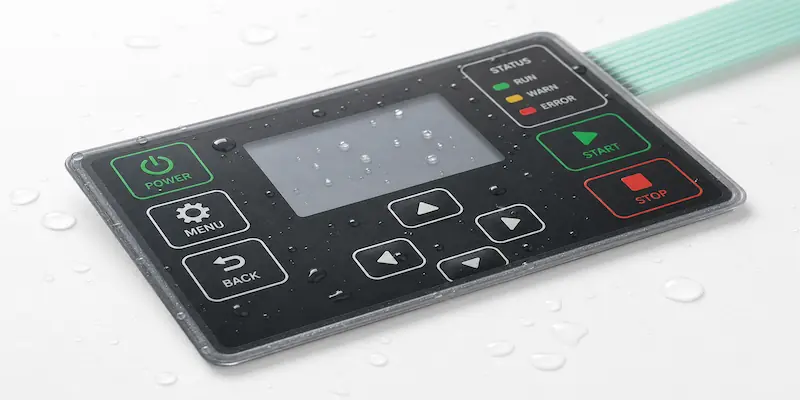
Engineering reference
When this product fits
A waterproof membrane switch is not waterproof because the top film looks sealed. The weak points are usually tail exit, adhesive edge, connector area, vent path, enclosure flatness, and installation pressure.
- outdoor equipment and marine controls
- washdown panels and wet industrial areas
- medical devices cleaned with liquid disinfectants
- pool, spa, and appliance control panels
Engineering reference
Engineering notes before tooling
IP65 splash resistance and IP67 immersion are different design targets. Do not approve one sample test and assume the other.
Tail exits need sealing strategy: rear exit, side exit, strain relief, and bend radius all matter.
Adhesive width around the perimeter is often more important than adding more layers.
Connector sealing may require a separate gasket or potting decision.
Engineering reference
Common failure points
tail slot left unsealed behind the overlay
thin adhesive land around corners
enclosure surface not flat enough for the gasket
IP target not written into the RFQ
Engineering reference
What to send for RFQ
Engineering reference
Related design guidance
FAQ
Questions buyers usually ask
What affects the cost of waterproof membrane switches?
Main drivers include material, printed colors, tooling, dome or LED count, connector, adhesive stack, test requirement, and order quantity.
What should be tested at sample stage?
Check continuity, appearance, actuation feel, tail bend, adhesive fit, window clarity, LED visibility, and any IP or cleaning requirement in the real enclosure.
When is this design not recommended?
It is not recommended when the required travel, current load, serviceability, temperature, or mechanical abuse exceeds what a thin interface stack can handle.
RFQ support
Send a drawing before the design is locked.
For waterproof membrane switches, the useful review happens before tail exit, connector, adhesive, and artwork decisions become expensive to change.