Custom Membrane Switches
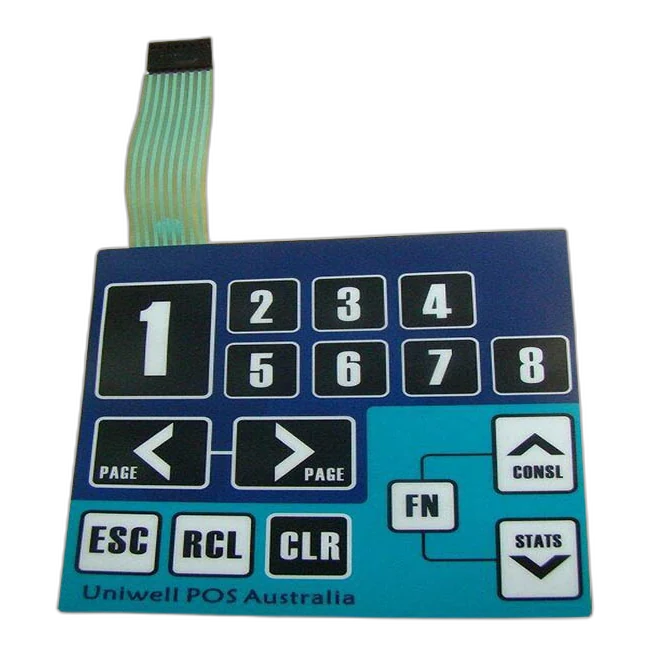
A custom membrane switch combines a printed graphic overlay, spacer, circuit layer, adhesive, tail, and connector into a low-profile control interface. It is useful when the enclosure needs a sealed face, repeatable labeling, and a layout that can be shaped around the product instead of a standard keypad.
- industrial control panels with limited front-panel depth
- medical and diagnostic instruments that need wipe-clean surfaces
- outdoor or marine controls that require sealed key areas
- appliance, access, and instrumentation panels with custom legends
Engineering reference
When this product fits
A custom membrane switch combines a printed graphic overlay, spacer, circuit layer, adhesive, tail, and connector into a low-profile control interface. It is useful when the enclosure needs a sealed face, repeatable labeling, and a layout that can be shaped around the product instead of a standard keypad.
- industrial control panels with limited front-panel depth
- medical and diagnostic instruments that need wipe-clean surfaces
- outdoor or marine controls that require sealed key areas
- appliance, access, and instrumentation panels with custom legends
Engineering reference
Engineering notes before tooling
Confirm tail exit direction before tooling. A switch can pass electrical testing on the bench and still fail after assembly if the tail bends into an enclosure wall.
Use PET when flex life and chemical resistance matter. Use polycarbonate when graphic depth or certain embossing effects matter, but check cracking risk around sharp bends.
Metal dome choice affects actuation force, tactile feel, stack height, and life cycle. Do not choose it from force alone.
Adhesive must match the enclosure surface, not just the overlay. Powder-coated metal, textured plastic, and gasketed housings behave differently.
Engineering reference
Common failure points
tail radius too tight after final enclosure assembly
LED windows too close to opaque ink edges
spacer venting missing on large keys
adhesive selected before surface energy is known
Engineering reference
What to send for RFQ
Engineering reference
Related design guidance
FAQ
Questions buyers usually ask
What affects the cost of custom membrane switches?
Main drivers include material, printed colors, tooling, dome or LED count, connector, adhesive stack, test requirement, and order quantity.
What should be tested at sample stage?
Check continuity, appearance, actuation feel, tail bend, adhesive fit, window clarity, LED visibility, and any IP or cleaning requirement in the real enclosure.
When is this design not recommended?
It is not recommended when the required travel, current load, serviceability, temperature, or mechanical abuse exceeds what a thin interface stack can handle.
RFQ support
Send a drawing before the design is locked.
For custom membrane switches, the useful review happens before tail exit, connector, adhesive, and artwork decisions become expensive to change.